Pain in the back of the heel makes walking and standing uncomfortable. It usually comes from irritation or strain in the Achilles tendon or nearby areas. This pain often starts slowly and gets worse with activity.
In India, many people face this issue. One study of 200 heel pain cases found 32 linked to Achilles tendinopathy (source: Modifiable Risk Factors Associated with Heel Pain in Indian Population – An Observational Study). Another study showed a 59% rate of calcaneal spurs in Indian patients with heel pain, most common in the 40-50 age group (source: Incidence of calcaneal spur in Indian population with heel pain).
Common Causes
Pain here is often called posterior heel pain. The main causes are simple to understand.
Achilles Tendinopathy
This happens when the Achilles tendon (the thick cord connecting your calf muscles to the heel bone) gets irritated or worn down. It can come from too much running, jumping, or sudden increases in activity. Tight calf muscles raise the risk. In adults, it often involves wear and tear over time. Pain shows up above the heel or right where the tendon attaches.
Insertional Achilles Tendinopathy
Pain centers at the point where the tendon meets the heel bone. Things like a bony bump (Haglund’s deformity), swollen bursa (a small fluid sac), or bone spurs make it worse. Shoes with hard backs or high heels rub and irritate the area.
Retrocalcaneal Bursitis
This is swelling in the small fluid sac between the Achilles tendon and heel bone. It causes pain from rubbing or pressure.
Haglund’s Deformity
A bony enlargement on the back of the heel rubs against the tendon and bursa. Tight or stiff shoes press on it and increase pain.
Other factors include bone spurs (extra bone growth), though they do not always hurt. In India, long hours standing on hard floors, poor shoe choices (like flat or tight ones), and extra body weight add stress to this area.
Types of Heel Pain
Heel pain can happen in different spots and for different reasons. Here are the most common types people experience.
Bottom of the Heel Pain (Plantar Heel Pain)
This is the most frequent kind. It feels like a sharp stab or ache under the heel, often worst with the first steps in the morning or after sitting for a while. The main cause is usually plantar fasciitis, where the thick band of tissue under the foot gets irritated or torn from overuse, tight calves, flat feet, or standing a lot.
Back of the Heel Pain (Posterior Heel Pain)
This hurts right at the back of the heel, near where the Achilles tendon attaches. It often feels like a dull ache or soreness that gets worse with activity like walking uphill, running, or pushing off your toes. Common causes include Achilles tendon irritation, swollen fluid sacs, or bony bumps rubbing the area.
Pain Inside the Heel Bone
This is deeper pain in the middle or bone itself. It can come from stress fractures (small cracks in the bone from too much impact), bruised heel pads (thin cushion under the heel wearing down), or nerve issues. It often feels like a bruise or burning and worsens with weight on the heel.
Other Less Common Types
- Heel spurs: Extra bone growths that may or may not hurt (often linked to plantar fasciitis or Achilles issues).
- Nerve pain: Tingling, burning, or shooting pain from compressed nerves.
- In kids/teens: Growth-related pain at the back of the heel (like Sever’s disease).
Most heel pain is from overuse, poor shoes, or extra weight, but the spot where it hurts helps figure out the type.
Difference Between Plantar Fasciitis and Back of Heel Pain
Plantar fasciitis and back of heel pain (often from Achilles issues) are two different problems, even though both cause heel soreness. Here’s a simple comparison table.
| Aspect | Plantar Fasciitis (Bottom Heel Pain) | Back of Heel Pain (Posterior Heel Pain / Achilles Issues) |
|---|---|---|
| Where the pain is | Under the heel, sometimes into the arch | At the back of the heel, near the Achilles tendon |
| Type of pain | Sharp, stabbing, like stepping on something | Dull ache, soreness, or stiffness |
| When it's worst | First steps in morning or after rest; improves a bit with walking | Worse during activity (running, uphill, pushing off toes); may ache after use |
| What makes it hurt more | Standing long, hard floors, flat shoes without support | Tight shoes pressing the back, uphill walking, stairs |
| Main cause | Irritation or small tears in the tissue band under the foot | Strain or wear on the Achilles tendon or nearby swelling |
| Feels tender when | Pressing the bottom of the heel | Pressing the back of the heel or squeezing the tendon |
| Swelling location | Usually under or around the heel bottom | At the back, near the tendon (may look thickened) |
| Common in | Runners, people who stand a lot, flat feet | Runners, jumpers, people with tight calves, high heels wearers |
Symptoms
Pain often builds up over time.
- Soreness or ache at the back of the heel, especially bad when you first stand or walk after sitting or sleeping.
- Tenderness if you press the spot.
- Swelling or thickening near the tendon.
- Stiffness that loosens a bit with movement but comes back after more activity.
- Pain that gets stronger on stairs, uphill walking, or running.
- In bad cases, a limp or feeling of weakness.
The pain can feel dull and achy or sharp, and it usually worsens with use.
Diagnosis
A doctor checks your symptoms and examines the area for swelling, tenderness, and how well you move your ankle. They may ask you to stand on your toes or walk to see the issue.
Tests include:
- X-rays to look for bone spurs or bony bumps.
- Ultrasound to check tendon thickness, small tears, or bursa swelling.
- MRI for a clear view if the problem seems complex.
Treatment Options
Most people get better without surgery. Try these steps for 3-6 months first.
Rest and Change Activities
Cut back on running, jumping, or long walks. Skip hills or stairs for a while. Use crutches if pain is very bad.
Ice and Pain Relief
Put ice on the area for 15-20 minutes, a few times a day. Pain medicines like ibuprofen can help with swelling (talk to a doctor before using them).
Stretching and Exercises
Gentle calf stretches help. Eccentric exercises (like slowly lowering your heels from a step) work well for Achilles issues. Do them daily.
Shoe Changes
Choose shoes with soft backs, good cushioning, and a small heel raise. Avoid tight or hard-backed shoes. Add heel lifts or pads inside shoes.
Supports
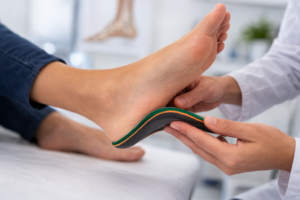
Over-the-counter or custom insoles give arch support and take pressure off the tendon.
Physical Therapy
A therapist may use massage, ultrasound, or guided exercises.
Other Help
Night splints keep your foot pointed to stretch the tendon overnight. For stubborn cases, other treatments like shockwave may be tried.
Surgery is only for cases that do not improve after many months, like removing large spurs or fixing severe tendon damage.
Prevention
Stop pain from starting or coming back with these habits.
- Wear shoes with good cushioning and support, especially if you stand or walk a lot.
- Stretch your calves every day.
- Warm up before exercise and build up activity slowly.
- Keep a healthy weight to ease load on your feet.
- Switch between different shoe types and avoid long periods in high heels or completely flat shoes without support.
If pain lasts more than a few weeks or stops you from normal walking, see a foot doctor or orthopedic specialist soon. Getting help early keeps it from getting worse.
FAQs
1. Why does the back of my heel hurt?
Usually from Achilles tendon irritation, tight calves or rubbing from shoes or bony bumps.
2. Is back of heel pain the same as plantar fasciitis?
No plantar fasciitis hurts under the heel or arch; back of heel pain is at the Achilles area.
3. How long does the sore back of the heel last?
Most cases improve in 4 to 12 weeks with rest ice stretches and better shoes.
4. What helps pain behind the heel at home?
Ice 15 to 20 min several times a day gentle calf stretches cushioned shoes with heel lift and supportive insoles.
5. When should I see a doctor for back or heel pain?
If pain lasts more than 2 to 3 weeks causes limping or swelling or stops normal walking see a podiatrist or orthopedic soon.