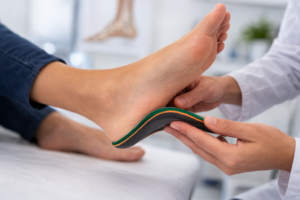
Diabetes significantly increases the risk of foot complications due to nerve damage, reduced blood flow, and altered foot mechanics. These changes make the feet vulnerable to excessive pressure, skin breakdown, and non-healing wounds, which are well-documented contributors to diabetic foot ulcer development. In clinical practice, one of the most effective non-invasive interventions for preventing these complications is the use of diabetic insoles.
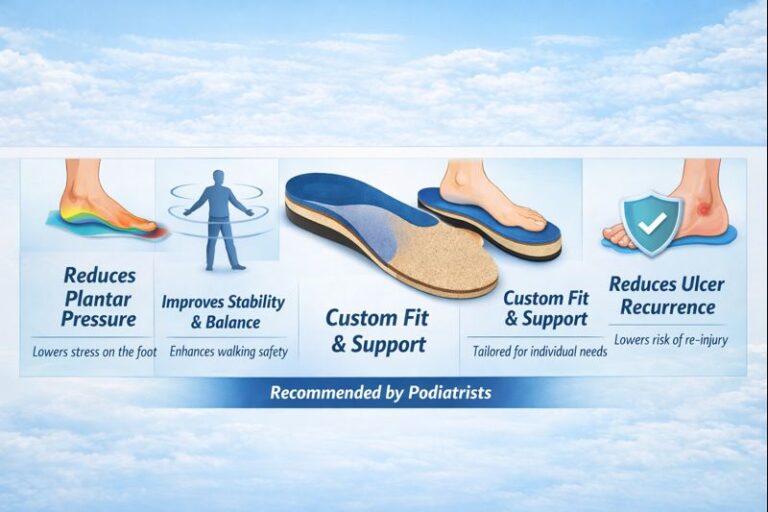
Diabetic insoles, including customized insoles designed for patients with diabetes, are widely prescribed by podiatrists and foot care specialists to reduce plantar pressure, improve stability, and lower the risk of diabetic foot ulcers. Their benefits are supported by extensive clinical research and long-term outcome studies.
This article explains why diabetic insoles are medically recommended, how they protect the diabetic foot, and which patients benefit the most from their regular use.
Understanding the Diabetic Foot Risk
Why Foot Problems Develop in Diabetes
From a medical perspective, diabetic foot complications occur due to a combination of factors
- Loss of protective sensation caused by peripheral neuropathy
- Repetitive high pressure during walking that goes unnoticed
- Foot deformities that concentrate pressure in small areas
- Reduced circulation that slows healing
When pressure is not adequately managed, tissue damage occurs beneath the skin before visible signs appear. This mechanism is widely recognized as a primary pathway leading to diabetic foot ulcers, which is why prevention strategies focus heavily on pressure redistribution rather than symptom treatment
How Diabetic Insoles Support Foot Health
Diabetic shoe insoles are designed to alter how pressure is distributed across the foot during standing and walking. Instead of allowing stress to concentrate under the forefoot or heel, these insoles spread forces more evenly, protecting vulnerable areas.
Primary Clinical Functions
- Reduce excessive plantar pressure
- Protect areas prone to ulcer formation
- Improve foot stability in patients with neuropathy
- Support safer walking mechanics
Clinically Proven Benefits of Diabetic Insoles
1. Reduction in High Plantar Pressure
High plantar pressure is the strongest predictor of diabetic foot ulcer development. Clinical studies report that diabetic insoles produce clinically meaningful reductions in plantar loading, with randomized controlled trials and systematic reviews documenting peak pressure reductions typically ranging from approximately 25 percent to over 50 percent, depending on design and patient factors.
Outcome Measured | Clinical Result |
Peak pressure reduction | 25% to 54% |
Pressure time exposure | Significant reduction |
Forefoot stress | Markedly lowered |
Lower pressure means lower tissue damage risk, even during prolonged walking, which is directly linked to ulcer prevention in neuropathic diabetic feet
2. Prevention of Diabetic Foot Ulcers
Ulcer prevention is the primary medical goal of prescribing diabetic insoles. A meta-analysis of eight randomized controlled trials found that special therapeutic footwear, including diabetic insoles, reduced diabetic foot ulcer incidence by 51 percent compared to conventional footwear, with a pooled relative risk of 0.49 (95% CI 0.28–0.84).
Patient Group | Ulcer Risk Outcome |
Therapeutic insoles users | 51% lower risk |
Conventional footwear users | Higher recurrence |
This reduction is clinically meaningful and forms the basis of international diabetic foot care guidelines that recommend pressure offloading interventions for high-risk patients.
Sources: onlinelibrary
3. Improved Balance and Walking Safety
Many diabetic patients experience instability due to reduced foot sensation, which increases fall risk and limits mobility.
Research investigating diabetic insoles and sensory-focused insole designs shows that balance outcomes in people with diabetic peripheral neuropathy are commonly assessed using measures such as center of pressure sway velocity, which reflects postural stability.
Research indicates that diabetic insoles may:
- Support balance-related outcomes in people with diabetic peripheral neuropathy
- Address postural control using validated clinical balance measures
- Improve walking confidence in neuropathic populations
Improved stability is particularly important for older adults and patients with long-standing diabetes.
Sources: tandfonline
4. Benefits of Customized Insoles for Diabetes
Customized insoles are designed based on an individual patient’s foot structure, pressure distribution, and gait pattern. From a clinical standpoint, this allows for more precise protection of high-risk areas.
A participant-blinded randomized controlled trial comparing customized and prefabricated insoles found no significant difference in peak pressure reduction, while reporting a modest advantage for customized insoles in reducing forefoot pressure-time integral, a clinically relevant ulcer risk parameter. Systematic reviews further support the role of custom insoles in targeted pressure redistribution for patients with complex foot conditions.
Key clinical advantages include:
- Targeted pressure relief under ulcer-prone regions
- Accommodation of deformities without friction
- Better long-term comfort, which improves daily use and adherence
5. Reduced Risk of Ulcer Recurrence in High-Risk Patients
Patients with a previous history of diabetic foot ulcers face a high risk of recurrence. A prospective randomized proof-of-concept study using continuous plantar pressure monitoring reported a 71 percent reduction in ulcer incidence in the intervention group compared to control. An exploratory analysis of patients with good adherence showed an 86 percent reduction in ulcer recurrence.
Clinical findings show:
- 71% to 86% reduction in ulcer recurrence
- Earlier detection of harmful pressure levels
- Improved patient adherence to protective footwear
This is particularly relevant in patients with advanced neuropathy and prior ulceration.
Source: thelancet
How Diabetic Insoles Fit Into Medical Foot Care
Daily Wear Time
Clinical studies highlight the importance of adherence. Research indicates that meaningful protection is associated with at least 5 to 7 hours of daily wear, with higher adherence linked to better outcomes.
Daily Wear Time | Expected Clinical Impact |
Less than 3 hours per day | Limited protection |
3 to 5 hours per day | Moderate protection depending on risk level |
5 to 7 hours per day | Meaningful protection supported by studies |
More than 7 hours per day | Best protection for high-risk patients |
Conclusion
Diabetic insoles are a clinically proven preventive tool that address one of the most critical risks in diabetes: uncontrolled plantar pressure. Extensive research confirms their role in reducing ulcer risk, improving stability, and protecting the diabetic foot over time.
Customized diabetic insoles, when used consistently and paired with appropriate footwear, offer substantial medical benefits and are a cornerstone of evidence-based diabetic foot care.
Medical Disclaimer
This content is for educational purposes only and does not replace professional medical advice. Patients should consult a qualified healthcare provider for individualized evaluation and treatment.