If you’ve been searching for foot support, you’ve probably seen these terms everywhere: insoles, orthotics, and shoe inserts. Many websites use them interchangeably, which makes it hard to know what you actually need.
But the difference matters. The right support can reduce pain, improve posture, and prevent injuries. The wrong one might only give temporary comfort or fail to fix the real problem.
This guide explains each clearly, so you can choose what fits your feet, your shoes, and your lifestyle.
Quick definition
– Shoe inserts: a general term for anything added inside a shoe.
– Insoles: full-foot inserts mainly meant for comfort and mild support.
– Orthotics / custom insoles: structured inserts designed to correct foot mechanics and alignment.
Now let’s break these down properly.
What are shoe inserts?
Shoe inserts are the biggest category. It refers to anything you add inside footwear to improve comfort, support, or fit.
That includes:
- full-length insoles
- heel pads
- arch supports
- metatarsal cushions
- orthotics
- custom insoles
So if someone says “insert,” you still need to know which type they mean. Inserts are not one specific product. They are the umbrella label.
Easy way to remember:
Shoe insert means anything inside the shoe that wasn’t already there.
What are insoles?
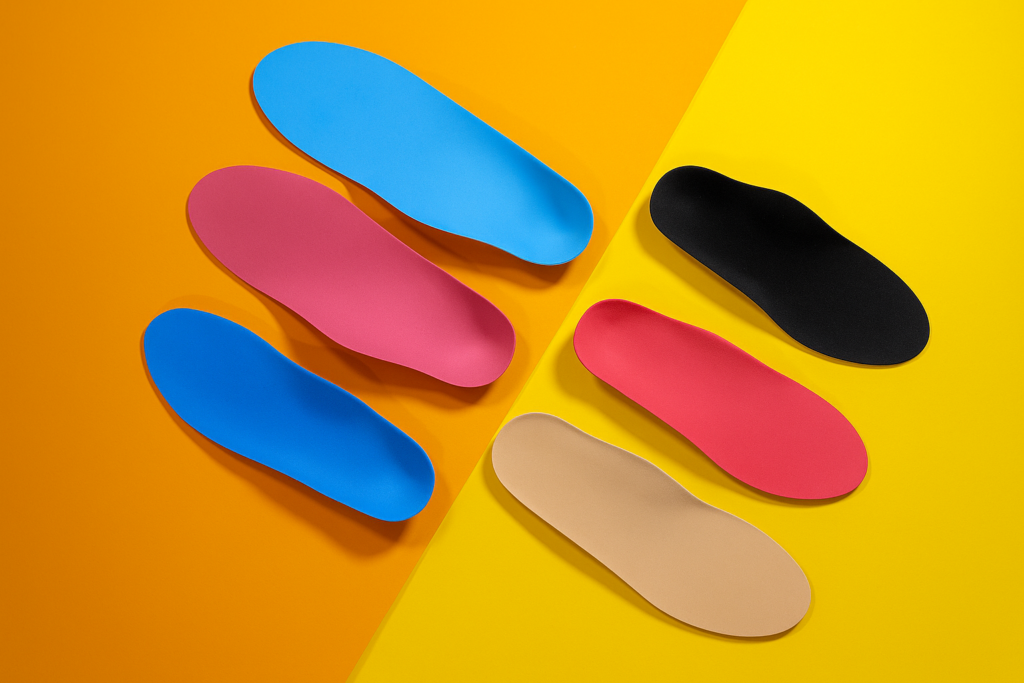
Insoles are full-length inserts that sit under your entire foot. Their main role is to improve comfort, absorb shock, and reduce pressure on painful areas.
They usually focus on:
- cushioning the heel and forefoot
- supporting your arch lightly or moderately
- making shoes feel softer and better fitted
reducing fatigue when standing or walking
Insoles are best for:
- tired feet after long days
- mild arch discomfort
- everyday walking or travel
- sports where impact is high
- people who want comfort without bulky support
Physio perspective:
Insoles help reduce pressure and impact, but they do not strongly control movement. If your pain comes mainly from strain or overuse, insoles help. If pain comes from how your foot moves, you may need more structured support.
What are orthotics?
Orthotics are designed to guide how your foot functions. Instead of just cushioning, they help control alignment and movement, especially when the foot rolls inward or outward too much.
Orthotics work by:
- supporting the arch firmly
- stabilizing the heel position
- improving weight distribution
- reducing stress on ligaments, tendons, and joints
- aligning the foot so the knees, hips, and spine move better
Orthotics can be:
1. Prefabricated orthotics
These are ready-made but more supportive than normal insoles.
They are useful when you need structured arch support but don’t need full customization.
Good for:
- mild to moderate flat feet
- mild overpronation
- early stage plantar fasciitis
- sport support
2. Custom orthotics / custom insoles
These are designed for your exact foot shape and walking pattern. A professional assessment or scan is used to map:
- your arch height and flexibility
- pressure hot spots
- heel alignment
- gait pattern
- pain zones
- activity needs
Good for:
- chronic pain that keeps returning
- severe flat feet or high arches
- heel spurs or plantar fasciitis
- knee or lower back pain linked to feet
- sport-specific support needs
Where do custom insoles fit?
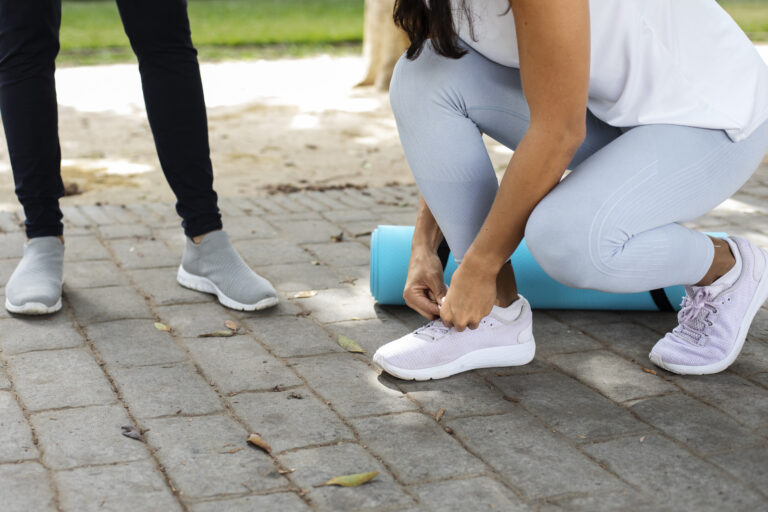
Many people search for “custom insoles” thinking they’re different from orthotics. In reality:
Custom insoles are custom orthotics.
If they are made after an assessment or scan for your foot mechanics, they are orthotics. The difference is only wording.
A proper custom insole should:
- match your arch perfectly
- correct foot roll (pronation or supination)
- distribute pressure evenly
- fit your shoe type and daily routine
- support the foot without feeling bulky or tight
Insoles vs Orthotics vs Shoe Inserts
Feature | Standard Insoles | Orthotics / Custom Insoles | Shoe Inserts |
What they do | Comfort and cushioning | Correct foot movement and alignment | Any support added to shoes |
Support level | Mild to moderate | Moderate to high | Depends on type |
Fit | Standard sizes | Structured prefab or fully custom | Can be full or partial |
Best for | tired feet, mild discomfort | flat feet, heel pain, posture issues | broad term only |
Goal | reduce pressure | fix mechanics | varies |
How to choose what you need
Choose standard insoles if
- your pain is occasional, not daily
- your feet feel tired after standing long hours
- you need extra cushioning in sports shoes
- you want a simple comfort upgrade
- your foot shape is normal or mildly flat
Why:
Insoles reduce fatigue and impact. They’re ideal when foot movement isn’t the main issue.
Choose orthotics or custom insoles if:
- pain is sharp or recurring
- you have flat feet or overpronation
- heel pain hits most in the morning
- your shoes wear unevenly
- pain spreads upward (ankle, knee, hip, back)
- sports trigger repeat strain
Why:
That kind of pain usually comes from mechanics. Orthotics restore alignment so strain doesn’t keep returning.
How do you know if you need custom orthotics, over-the-counter inserts, or none at all?
A simple way to decide is to look at how often you feel discomfort, what triggers it, and whether it keeps coming back.
You may need no inserts at all if:
- You have no regular foot pain and your feet feel fine after daily activity.
- You don’t notice uneven shoe wear.
- You don’t feel fatigue, heaviness, or strain after normal walking.
Why: If your feet are functioning well and you’re pain-free, extra support is not necessary.
You may need over-the-counter insoles or inserts if:
- You feel mild or occasional discomfort, especially after long standing, walking, or workouts.
- Your feet get tired quickly, but the pain is not sharp or daily.
- You want extra cushioning or light support for sports or long workdays.
You may need custom orthotics (custom insoles) if
- Pain is recurring, sharp, or lasting more than 2 to 3 weeks.
- You have known issues like flat feet, high arches, overpronation, plantar fasciitis, heel spurs, or chronic ankle, knee, or back pain linked to walking.
- Your shoes wear out unevenly or your feet roll in or out clearly while walking.
- You have tried basic insoles before but symptoms keep returning.
Quick rule of thumb
- No pain means no insert needed.
- Occasional pain or fatigue means OTC insoles are enough.
- Repeated or long-term pain means go custom.
What most people misunderstand
Myth 1: “All insoles are orthotics”
Not true. Insoles are mostly comfort-based. Orthotics are function-based. Orthotics are built to change the way your foot works, not just feel softer.
Myth 2: “Custom insoles are only for severe pain”
Custom support is not only for pain relief. It also improves stability, prevents injuries, supports sports performance, and corrects posture issues early. Many people use custom insoles before pain becomes severe.
Myth 3: “Soft inserts are always better”
Softness feels good short-term. But if your arch collapses or your heel rolls in, soft foam cannot hold structure. That’s why some people feel better for a few days, then pain returns. Comfort helps, but control fixes the cause.
Final takeaway
If you want everyday comfort, insoles are enough. If you need real correction and long-term relief, orthotics or custom insoles are the smarter choice.
Your feet are your body’s foundation. Supporting them correctly improves not just comfort, but alignment, movement, and posture from the ground up.