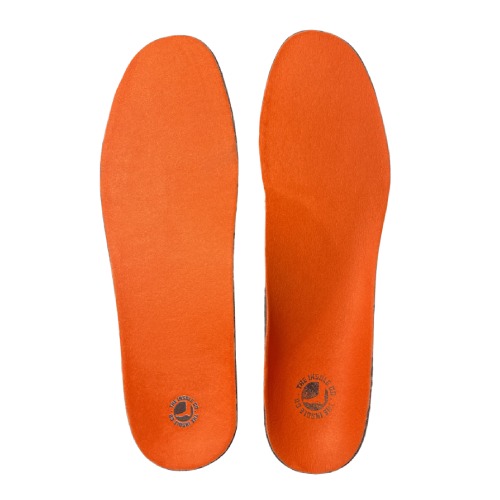
Some jobs are done mostly sitting down. Others keep workers standing, walking, lifting, carrying, patrolling, serving, cleaning, or working outdoors for much of the day.
This analysis ranks 14 non-agricultural Indian job groups by likely daily load on the feet. The ranking is based on a modelled Foot Load Index, which scores jobs across seven factors: standing, walking, load-bearing work, hard-surface exposure, outdoor heat exposure, shift-duration risk, and footwear restriction.
The ranking does not measure exact standing hours. It does not claim which workers have the most foot pain. Instead, it uses official occupation categories, public job descriptions, and a transparent scoring model to identify the jobs most likely to place high daily physical load on the feet.
Indian Jobs Hardest on the Feet
Ranked by standing time, load, heat exposure, and shift length. Click any bar to learn more.
Source: The Insole Company (insole.in) Foot-Stress Index — based on NCO-2015, PLFS 2025, NCS occupation standards
Key findings
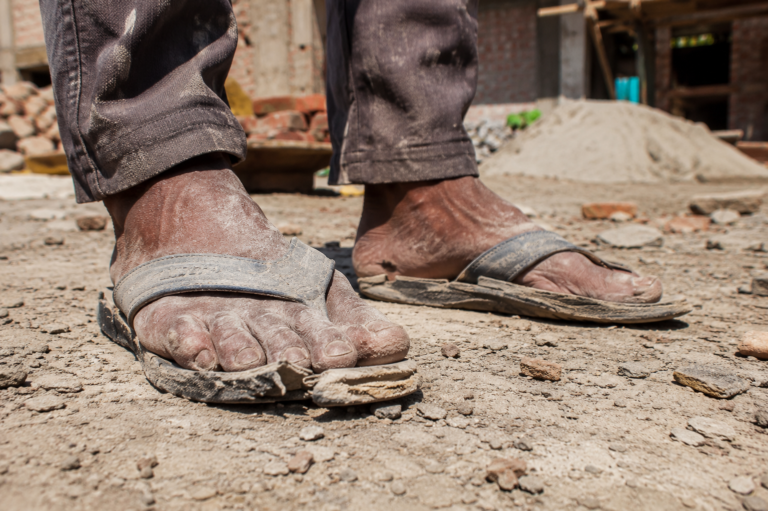
- Construction labourers and helpers ranked highest, with a very high foot-load score.
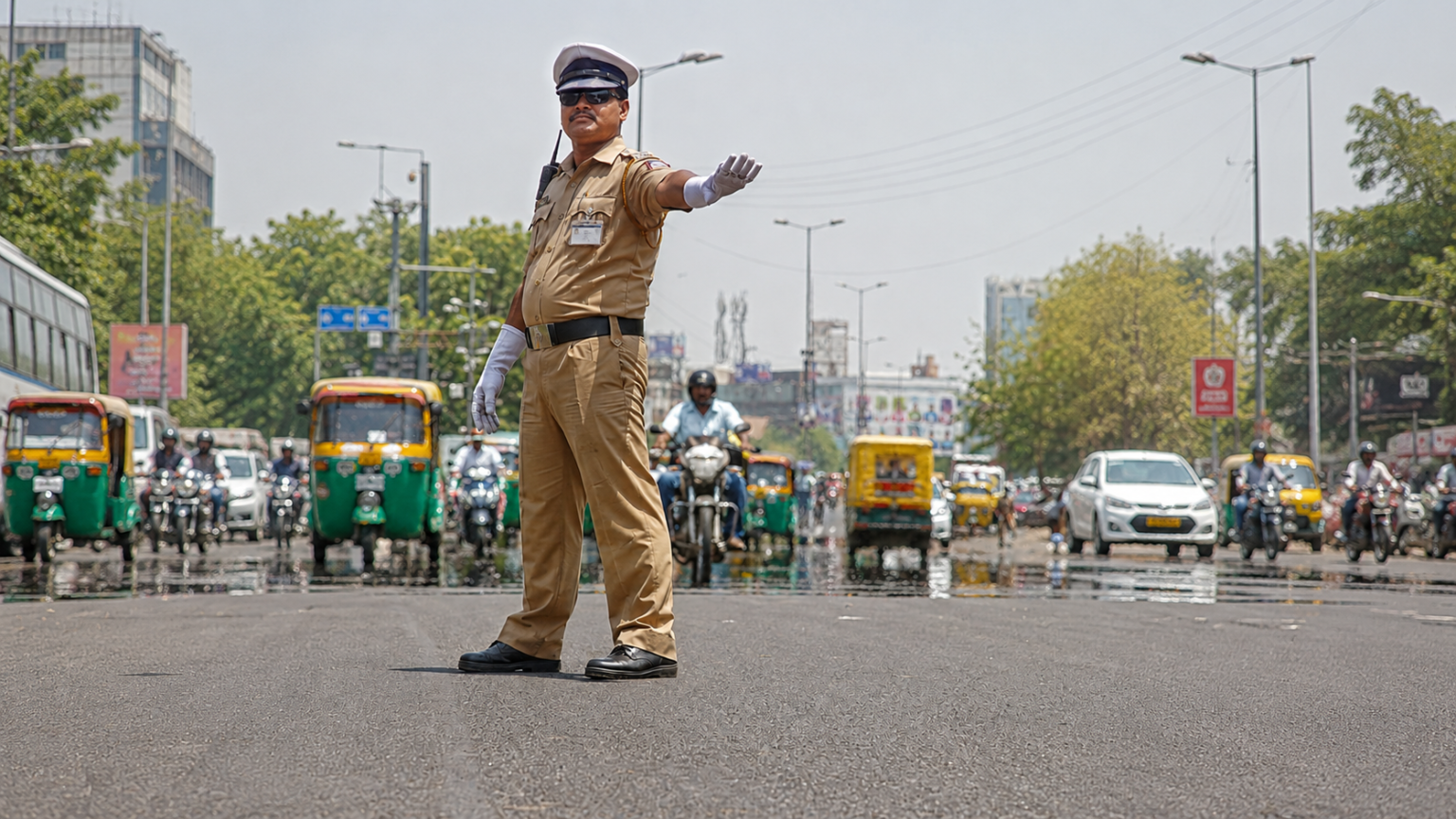
- Traffic police and field police roles, porters and transport support workers, and warehouse workers/loaders also ranked near the top.
- Jobs involving outdoor heat, hard surfaces, carrying loads, or long shifts tended to score higher.
- Indoor service and care jobs such as nurses, restaurant and hotel service staff, retail sales staff, and salon workers also ranked meaningfully because of prolonged standing and hard floors.
- Teachers were included because the job can involve standing and classroom movement, but they ranked lower than jobs involving heavy carrying, outdoor heat, or constant movement.
How Each Job Scores Across 7 Factors
| Job | Standing↕ | Walking↕ | Load↕ | Surface↕ | Heat↕ | Shift↕ | Footwear↕ |
|---|---|---|---|---|---|---|---|
| Construction labourers and helpers | 5 | 4 | 5 | 5 | 5 | 4 | 4 |
| Traffic police and field police roles | 5 | 4 | 2 | 4 | 5 | 5 | 4 |
| Porters and transport support workers | 4 | 5 | 5 | 4 | 3 | 4 | 2 |
| Warehouse workers and loaders | 4 | 5 | 5 | 5 | 1 | 4 | 3 |
| Delivery and package workers | 3 | 5 | 4 | 4 | 5 | 4 | 2 |
| Security guards | 5 | 3 | 1 | 4 | 4 | 5 | 3 |
| Nurses and hospital support staff | 5 | 4 | 2 | 5 | 1 | 5 | 3 |
| Street vendors and hawkers | 5 | 2 | 2 | 4 | 5 | 4 | 1 |
| Restaurant and hotel service staff | 5 | 4 | 2 | 5 | 1 | 4 | 3 |
| Domestic workers and housekeeping staff | 4 | 4 | 3 | 4 | 1 | 4 | 1 |
| Factory and manufacturing labourers | 4 | 3 | 3 | 5 | 1 | 4 | 4 |
| Retail sales staff | 5 | 2 | 1 | 5 | 1 | 4 | 3 |
| Salon workers | 5 | 2 | 1 | 4 | 1 | 4 | 2 |
| Teachers | 4 | 2 | 0 | 3 | 0 | 3 | 1 |
Source: The Insole Company (insole.in) Foot-Stress Index — based on NCO-2015, PLFS 2025, NCS occupation standards
Top 5 Jobs Hardest on the Feet – Why They Ranked High
Tap any card to see the full breakdown by factor
Source: The Insole Company (insole.in) Foot-Stress Index
Sources and scope
This analysis uses India’s official occupation classification system, recent labour-force context, and public occupational descriptions. Agricultural occupations were excluded, while informal non-agricultural jobs such as street vendors, porters, domestic workers, construction helpers, and loaders were included. The scoring approach is aligned with our detailed Foot Load Index methodology, which explains how occupational foot-load exposure is assessed.
Source notes
This ranking uses publicly available Indian labour and occupation references to support the job categories and role descriptions. The scores are based on a custom Foot-Stress Index, using factors such as standing, walking, load carrying, work surface, heat exposure, shift demands, and footwear conditions.
MoSPI Periodic Labour Force Survey (PLFS)
Used for recent labour-force context. PLFS supports employment and unemployment indicators, but does not directly measure standing hours.
Source: https://www.mospi.gov.in/themes/product/69-periodic-labour-force-survey-plfsMoSPI PLFS Annual Report 2025 Press Note
Used to support that the PLFS Annual Report 2025 covers January 2025 to December 2025.
Source: https://www.mospi.gov.in/uploads/latestReleases/latest_release_1774607827733_3e8964a9-268b-4cc9-ad65-cfc8a9-268b-4cc9-ad65-cfc8a9e32f08_Press_note_AR_PLFS_2025_23032025_V2.1_26032026_final.pdfDirectorate General of Employment — NCO-2015 Page
Used as the main occupation-classification framework for Indian job roles.
Source: https://dge.gov.in/nco-2015National Classification of Occupations 2015 — Volume I
Used for the occupation-classification approach.
Source: https://dge.gov.in/sites/default/files/2024-05/National_Classification_of_Occupations_Vol_I-2015.pdfNational Classification of Occupations 2015 — Volume II-A
Used for descriptions of police, nursing, retail, food service, teaching, salon, and personal-service roles.
Source: https://dge.gov.in/sites/default/files/2024-05/National_Classification_of_Occupations_Vol_II-A-2015.pdfNational Classification of Occupations 2015 — Volume II-B
Used for descriptions of construction labourers, porters, transport and storage labourers, street vendors, and manufacturing labourers.
Source: https://dge.gov.in/sites/default/files/2024-05/National_Classification_of_Occupations_Vol_II-B-2015.pdfNCS Housekeeping Attendant Occupational Standard —
Used to support housekeeping tasks such as sweeping, mopping, wiping, physical activity, 10–12 hour workdays, shift or overtime possibility, and risks such as overexertion.
Source: https://www.ncs.gov.in/content-repository/Lists/NCO%20Job%20Roles/attachments/4179/5151.0201.pdfNCS Courier Delivery Executive Occupational Standard
Used to support delivery and package-worker tasks such as package collection, doorstep delivery, field work, local travel, 8–9 hour workdays, and possible overtime.
Source: https://www.ncs.gov.in/content-repository/Lists/NCO%20Job%20Roles/attachments/6522/9621.0802.pdf