Children’s feet go through rapid growth and structural changes. It is common for parents to notice flat feet, inward rolling ankles, or complaints of heel pain and wonder whether insoles are necessary.
The short answer is that insoles can be beneficial, but only in the right situations.
This guide explains when kids’ orthotics are helpful, what research says, and how to determine whether your child actually needs support.
Understanding How Children’s Feet Develop
It is completely normal for young children to have flat feet. In early childhood, the arch is often not visible when standing. This does not automatically indicate a problem.
Several developmental factors contribute to this appearance:
- Developing arches
The arch structure is still forming in early years. The muscles, tendons, and ligaments that support the arch strengthen gradually over time. - Increased ligament flexibility
Children naturally have more flexible joints. This flexibility allows the foot to appear flatter when bearing weight, even though the structure is healthy. - Higher body fat in early years
A natural fat pad along the arch can make the foot look flat. As children grow, this reduces and the arch becomes more defined.
In many cases, arches begin forming more visibly between ages 5 and 10. For some children, this process continues even later.
Flat feet alone are not a concern unless they cause pain, fatigue, instability, or changes in walking mechanics. The decision to intervene should be based on symptoms and function, not simply how the foot looks.
When Are Insoles Good for Kids?
Insoles are typically recommended when a child experiences:
- Persistent foot pain
- Heel pain commonly linked to Sever’s disease
- Knee or shin discomfort
- Fatigue during walking or sports
- Noticeable instability or inward ankle collapse
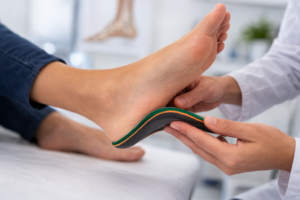
Orthotics help improve foot alignment and reduce strain on developing joints. By supporting the arch and controlling excessive pronation, insoles can reduce stress on tendons and growth plates.
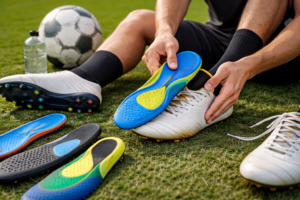
If your child is active in sports, proper foot support can also reduce repetitive strain.
What Does Research Say About Kids’ Orthotics?
Clinical evidence suggests that orthotics may reduce pain and improve function in children with symptomatic flexible flatfoot.
A 2022 systematic review in pediatric foot research found that foot orthoses can improve comfort and walking mechanics in children who experience pain related to flat feet. The review also noted limited evidence for using orthotics in children without symptoms.
This aligns with best practice. Orthotics should be prescribed for function and discomfort, not simply for flat arches.
Can You Put Insoles in Kids’ Shoes?
Yes, insoles can be placed in most children’s shoes, but the shoe itself plays an important role in how effective the support will be.
Orthotics are designed to guide foot alignment and improve stability. If the shoe lacks structure, the insole cannot function properly.
For best results, shoes should:
- Have removable insoles so the orthotic can sit flat without crowding the foot
- Provide adequate depth to prevent tightness or pressure on the top of the foot
- Offer a firm heel counter to stabilize the rearfoot and prevent excessive movement
- Avoid excessive flexibility, especially in the midfoot area
Supportive footwear works together with the insole to improve comfort and alignment. Soft, unsupportive, or overly flexible shoes can limit the benefits of orthotics and reduce overall stability.
What Age Should Kids Get Orthotics?
There is no specific age at which every child should begin wearing orthotics. The decision is based on symptoms, function, and structural assessment rather than age alone.
Children’s feet develop gradually. In early childhood, flat feet are common and often part of normal growth. The arch typically begins forming between ages 5 and 10. For this reason, treatment is not recommended based solely on appearance.
Orthotics are usually considered when there are clear signs that foot mechanics are affecting comfort or movement.
Orthotics May Be Appropriate When:
Pain persists beyond normal growth phases
Occasional discomfort during growth spurts can be normal. However, consistent foot, heel, shin, or knee pain that interferes with daily activities should not be ignored.
Flat feet remain symptomatic after age 5 to 6
Flexible flat feet are common in younger children. If flat feet continue to cause pain, fatigue, or instability after early childhood, structured support may help reduce strain.
Walking mechanics appear compromised
If a child frequently trips, demonstrates excessive inward ankle rolling, or shows noticeable gait abnormalities, foot alignment may be contributing to inefficient movement patterns.
Are There Side Effects of Insoles for Kids?
When properly fitted and introduced gradually, children’s insoles are generally safe. Most children adapt well to added support. However, because insoles change how the foot interacts with the ground, a short adjustment period is normal.
What to Expect During the Adjustment Phase
When a child begins wearing insoles, the body is adapting to improved alignment and redistributed pressure. During the first one to two weeks, mild symptoms may include:
Temporary muscle soreness
Insoles can activate muscles that were previously underused. As posture and foot positioning improve, calves, arches, and even hips may feel mild soreness. This is usually temporary and settles as the body adapts.
Pressure awareness under the arch
Children may describe the sensation as “something under my foot.” This is common when arch support is introduced. The feeling should not be painful and typically decreases as the foot adjusts.
Minor skin irritation if poorly fitted
If an insole shifts inside the shoe or does not match the foot properly, friction can occur. Ensuring correct shoe fit and trimming prefabricated insoles when needed helps prevent this.
Custom Orthotics vs Over-the-Counter Insoles
| Feature | Over-the-Counter Insoles | Custom Orthotics |
|---|---|---|
| Best For | Mild discomfort | Moderate to severe symptoms |
| Cost | Budget-friendly | Higher investment |
| Design | Pre-made, general support | Designed based on foot assessment |
| Support Level | Limited structural correction | Targeted biomechanical support |
| Personalization | One-size or trimmed fit | Tailored to child’s foot structure |
Signs Your Child May Benefit from Insoles
Children do not always clearly express foot discomfort. Often, the signs show up in their movement patterns, activity levels, or shoe wear. If you notice consistent issues rather than occasional complaints, it may be worth seeking an evaluation.
Frequent Complaints of Foot or Leg Pain
If your child regularly mentions foot, heel, shin, or even knee pain, this may indicate excessive strain from poor foot alignment. Growing bones and developing joints are sensitive to repetitive stress. Persistent discomfort is not something children should simply “grow out of.”
Uneven Shoe Wear
Take a look at the soles of your child’s shoes. Excessive wear on the inner edge may indicate overpronation, where the foot rolls inward more than it should. Uneven wear patterns often reflect imbalances in walking mechanics.
Reduced Endurance During Physical Activity
If your child avoids running, tires quickly, or asks to sit out during sports, underlying foot discomfort could be a factor. Poor support can increase fatigue because muscles must work harder to stabilize the foot and ankle.
Recurring Heel Pain
Heel pain in children, particularly between ages 8 and 14, may be linked to growth-related conditions such as Sever’s disease. Proper arch support can help reduce strain on the heel’s growth plate and improve comfort during activity.
Excessive Inward Ankle Rolling
Noticeable inward ankle collapse while standing or walking may indicate reduced arch support and instability. Over time, this can place additional stress on knees and hips, affecting overall alignment.
When Insoles Are Not Necessary
Insoles may not be required if:
- The child has no pain
- The flat foot is flexible and functional
- Activity levels are unaffected
Monitoring development is often sufficient in these cases.
Supporting Healthy Foot Development
The goal of pediatric orthotics is not to fix normal development. It is to reduce pain, improve alignment, and support comfortable movement during growth.
When symptoms are present, early intervention can improve comfort and protect long-term joint health.
If your child is experiencing foot discomfort, a structured assessment can determine whether insoles are appropriate.
Foot support should always be intentional, evidence-informed, and tailored to the child, not routine.