Noticing an uneven foot can feel confusing at first. One foot may look flatter, one shoe may wear out faster, one arch may sit lower, or one side may feel more tired after walking.
A small difference between both feet is common. But when one foot starts affecting your walking comfort, shoe fit, balance, knee, hip, or lower back, it may need proper support.
An uneven foot can happen due to flat feet, high arches, poor foot alignment, old injury, leg length difference, weak foot muscles, or footwear that does not support the foot properly.
This blog explains what an uneven foot means, why it happens, signs to watch for, and how the right insoles can help improve comfort during daily movement.
What Does Uneven Foot Mean?
An uneven foot means one foot does not sit, move, or feel the same as the other.
It may show up as one arch sitting lower, one heel tilting inward, one ankle rolling more, one shoe wearing faster, or one foot feeling weaker while walking.
Sometimes an uneven foot is visible. Other times, you only notice it through pain, shoe wear, or discomfort after standing for long hours.
An uneven foot is not always serious, but it should not be ignored when it keeps causing pain or changes the way you walk.
Common Signs of an Uneven Foot
You may have an uneven foot if one foot looks flatter, one arch sits lower, one heel tilts more, one shoe wears out faster, or one side feels tired sooner during walking.
You may also notice one-sided heel pain, arch pain, ankle weakness, knee discomfort, hip tightness, or lower back pain after standing or walking.
A simple way to check is to place both shoes side by side and look at the heel, sole, and inner edge. If one shoe is clearly more worn down, one foot may be moving differently.
Uneven Foot Symptom Checker: Where Do You Feel It?
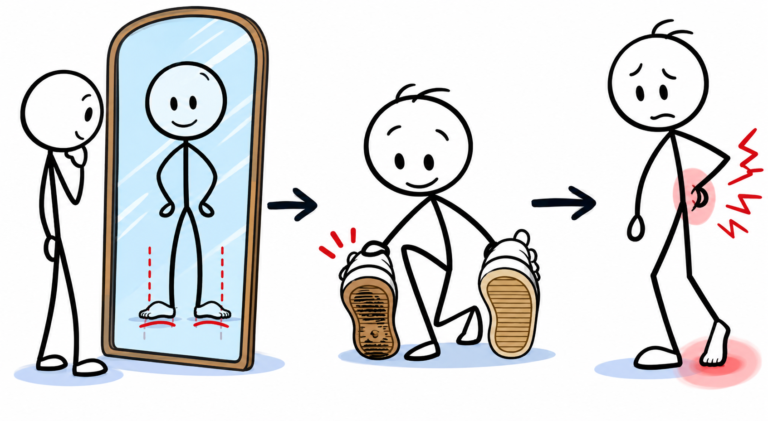
An uneven foot can affect more than the foot itself. Since your foot supports the body during standing and walking, even a small difference on one side can create discomfort in other areas.
Use this quick checker to understand what your symptoms may be pointing toward.
Tap Into Your Symptom Area | What It May Mean |
Foot | One-sided heel pain, arch pain, toe discomfort, or ball of foot pain may mean one foot is taking more strain than the other. |
Ankle | If one ankle rolls inward or outward more, your foot alignment may not be stable during walking. |
Knee | Strain in one knee during walking, stairs, or standing may be linked to how your foot is moving below it. |
Hip | A tight, tired, or uneven feeling in one hip may happen when one foot changes your walking pattern. |
Lower Back | Back pain after long standing or walking may be connected to imbalance starting from one foot. |
Shoe | If one shoe wears out faster, tilts more, or feels different, your foot may not be sitting evenly inside the shoe. |
Walking | Uneven, unstable, or less smooth steps may be a sign that one foot is not supporting your movement properly. |
Quick Self-Check
Stand in front of a mirror and look at both feet from the front. Does one arch look lower, one ankle roll inward, or one shoe tilt more than the other?
Now check your shoes. If one sole or heel is more worn down, your uneven foot may be affecting the way you walk.
If your discomfort is mostly on one side, your foot alignment, arch support, or footwear may need attention.
What Causes an Uneven Foot?
An uneven foot can come from your natural foot shape, arch position, walking pattern, old injury, leg length difference, or footwear habits.
The cause matters because the right support depends on why one foot is acting differently.
1. Flat Foot on One Side
A flat foot on one side is one of the most common reasons for an uneven foot.
When the arch drops, the foot may roll inward while standing or walking. If this happens more on one side, that foot may look flatter and feel less stable.
A flat uneven foot can cause arch pain, heel pain, inner shoe wear, knee discomfort, hip imbalance, or lower back strain.
How insoles help: Arch support insoles can support the lowered arch, improve foot stability inside the shoe, and make walking feel more balanced.
2. High Arch on One Side
A high arch can also make one foot feel uneven.
A high-arched foot is often more rigid, so it may not absorb walking impact smoothly. If one foot has a higher arch than the other, that side may feel harder, tighter, or more painful.
A high-arch uneven foot can lead to heel pain, ball of foot pain, outer shoe wear, calluses, ankle rolling, or stiffness during walking.
How insoles help: Cushioned insoles with arch support can improve comfort, reduce impact, and help the foot sit more securely inside the shoe.
3. Leg Length Difference
A leg length difference can make one foot work harder than the other.
A structural leg length difference means one leg bone is actually shorter. A functional leg length difference means the bones may be similar, but posture, arch collapse, pelvic tilt, or muscle tightness makes one side act shorter.
When this happens, one foot may land differently, one shoe may wear faster, and one side may feel more tired during walking.
How insoles help: Some people may need arch support, custom insoles, or a heel lift, but heel lifts should only be used after proper assessment.
4. Poor Foot Alignment
Foot alignment means how your foot sits when you stand and how it moves when you walk.
If one foot rolls inward, rolls outward, drops at the arch, or stays too stiff, the ankle, knee, hip, and lower back may adjust to keep the body moving.
Poor alignment can make an uneven foot feel worse during office hours, workouts, long walks, or daily standing.
How insoles help: Supportive insoles can help the foot sit in a more stable position and reduce unwanted movement inside the shoe.
5. Old Injury
An old injury can change the way one foot moves.
An ankle sprain, fracture, knee injury, hip injury, or surgery can make you avoid using one side normally. Even after healing, the body may continue walking in a changed pattern.
An injury-related uneven foot may feel weaker, less stable, more tired, or more painful after long walks.
How insoles help: Insoles can add cushioning, stability, and support while your foot handles daily movement.
6.Unsupportive Footwear
Footwear can make an uneven foot worse if the shoe is worn out, too flat, too narrow, or missing proper arch support.
A shoe that has already tilted or compressed on one side can make the foot sit at the wrong angle and increase discomfort.
Footwear-related uneven foot signs may include tired feet, heel tilt, faster sole wear, one shoe feeling different, or pain after wearing flat sandals or old shoes.
How insoles help: Insoles can improve the support inside your shoes and help the foot sit more comfortably during walking and standing.
Can an Uneven Foot Cause Knee, Hip, or Back Pain?
Yes, an uneven foot can affect the knee, hip, and lower back.
Your foot is the base of your posture. When one foot sits differently, the body may adjust above it. The ankle may roll, the knee may rotate, the hip may tilt, and the lower back may work harder to keep you balanced.
This does not mean every knee, hip, or back problem starts from the foot. But if you also notice uneven shoe wear, one foot looking flatter, or one-sided foot pain, the foot should be checked as part of the bigger picture.
Why Regular Shoes May Not Be Enough
Regular shoes are made for general foot shapes, not for your exact arch height, heel position, or walking pattern.
If you have an uneven foot, the shoe may not support that side properly. One foot may need firmer arch support, better heel control, or more cushioning than the other.
This is why some people still feel discomfort even after buying good shoes. The shoe may be fine, but the support inside the shoe may not match what your foot needs.
Insoles help fill that gap by adding support, cushioning, and stability where the foot needs it most.
How Insoles Help an Uneven Foot
Insoles help an uneven foot by supporting the arch, stabilising the heel, cushioning impact, and improving how the foot sits inside the shoe.
For a flat uneven foot, insoles can support the arch and reduce excess inward rolling. For a high-arch uneven foot, insoles can add cushioning and improve comfort. For uneven shoe wear, insoles can help the foot sit more securely and reduce extra strain on one side.
Insoles do not change bone structure, and they are not a replacement for medical care when pain is severe. But for many people, they can make daily walking, standing, and shoe comfort much better.
Best Insoles for an Uneven Foot
The best insoles for an uneven foot depend on the reason one foot is acting differently.
| Foot Concern | Best Insole Support |
|---|---|
| Flat foot on one side | Firm arch support with heel stability |
| High arch on one side | Cushioning with full-foot support |
| One foot flatter | Arch support based on foot shape |
| Heel pain | Heel cushioning with arch support |
| Uneven shoe wear | Stability support and better foot positioning |
| Standing all day | Full-length cushioning with arch and heel support |
| Leg length difference | Heel lift or custom insole after assessment |
| One-sided pain | Custom or semi-custom support may be better |
When Should You Use Custom Insoles?
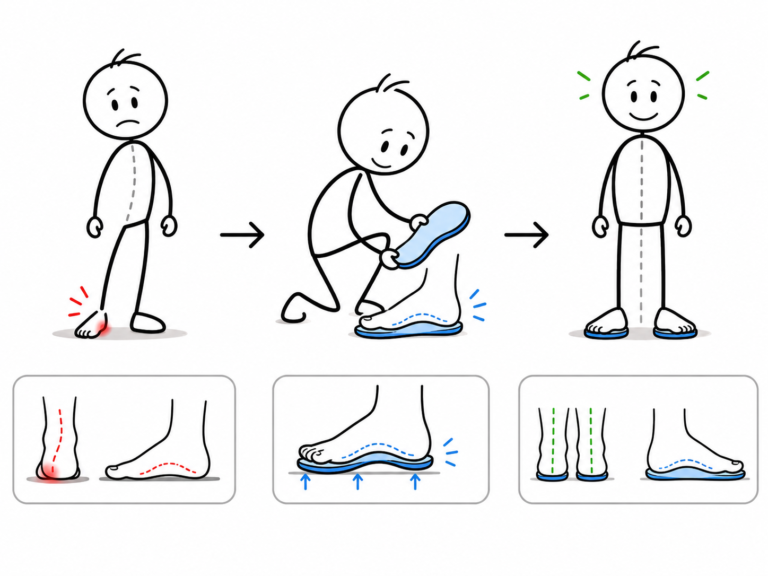
Custom insoles may be helpful when one foot needs a different level of support than the other.
You may need custom insoles if one foot is clearly flatter, one arch is much higher, one shoe wears out faster, pain is mostly on one side, or regular insoles do not give enough comfort.
Custom insoles are made around your foot shape, arch height, and support needs. They can be especially useful when an uneven foot is linked with flat foot, high arch, leg length difference, or long standing hours.
Daily Tips to Manage an Uneven Foot
Wear supportive shoes, replace worn-out footwear, use insoles suited to your foot type, avoid standing barefoot on hard floors for too long, stretch your calves, strengthen your feet, and check shoe wear every few months.
These simple habits can reduce daily discomfort and help your foot feel more supported.
When Should You Get an Uneven Foot Checked?
You should get an uneven foot checked if one foot looks different, one shoe wears faster, one side hurts more, you feel like one leg is shorter, you limp while walking, or pain moves to your knee, hip, or back.
A podiatrist, physiotherapist, or foot care specialist can assess your foot, walking pattern, footwear, and posture to understand what type of support may help.
Expert Note
An uneven foot is common, but repeated one-sided pain should not be ignored.
If the issue is mild, supportive footwear and insoles may help improve comfort. If pain is strong, long-lasting, or linked with injury, swelling, numbness, limping, or back pain, speak with a qualified healthcare professional.
This article is for general education and should not replace medical advice.
Final Thoughts
An uneven foot may seem like a small issue, but it can affect how you stand, walk, and feel throughout the day.
It can show up as one foot looking flatter, one shoe wearing faster, one arch sitting differently, or pain on only one side.
Common causes include flat foot, high arch, leg length difference, old injury, poor foot alignment, and unsupportive footwear.
The right insoles can help support your arch, cushion your foot, stabilise your heel, and improve daily walking comfort. If one foot feels different or your shoe keeps wearing unevenly, your foot may need better support inside your footwear.
Uneven Foot FAQs
1. What does uneven foot mean?
Uneven foot means one foot does not match the other in shape, movement, height, or comfort.
2. What causes an uneven foot?
An uneven foot can be caused by flat foot, high arch, leg length difference, old injury, poor footwear, or changes in foot alignment.
3. Can an uneven foot cause back pain?
Yes, an uneven foot can affect posture and walking, which may add strain to the lower back.
4. Can insoles help an uneven foot?
Yes, insoles can support the arch, cushion the heel, stabilise the foot, and improve comfort inside the shoe.
5. Why is one foot flatter than the other?
One foot may look flatter because of arch collapse, overpronation, injury, muscle imbalance, or functional leg length difference.
6. Is uneven shoe wear a sign of an uneven foot?
Yes, uneven shoe wear can suggest that one foot is moving, tilting, or loading differently while walking.