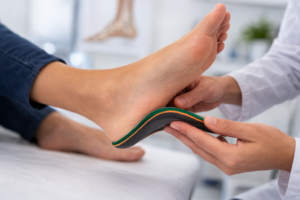
Flat feet (also called Pes Planus or fallen arches) means the inner arch sits low when you stand, so more of the sole contacts the ground. Many people have no symptoms, but some develop pain in the heel or arch area or swelling along the inside of the ankle.
What Does flat foot mean
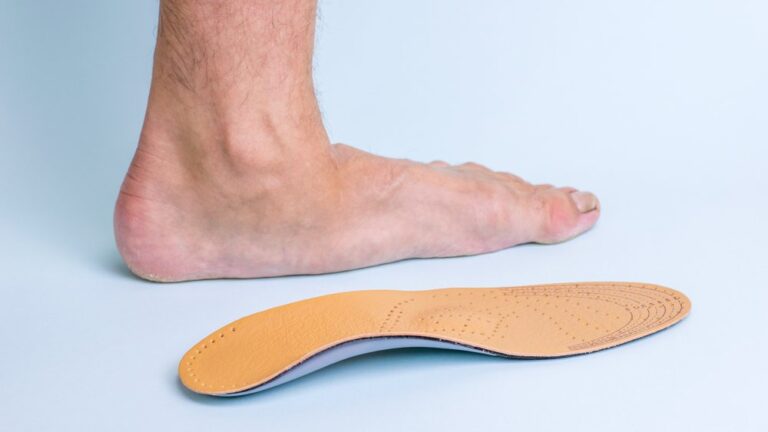
Image Courtesy: www.southtexaspodiatrist.com
Your arch helps distribute load when you walk and stand. With flatfoot, that arch compresses more under body weight. For some people, this is simply how their feet are built. For others, especially adults who notice their arch changing over time, it can reflect a structural shift that deserves a proper check.
Types Of Flat Foot
| Type | What you might notice | Why it matters |
|---|---|---|
| Flexible flatfoot | Arch looks low when standing but changes when you rise on toes | Often painless, but can still cause symptoms in some people |
| Rigid flatfoot | Arch stays low in most positions | Stiffness can signal a different underlying issue |
| Adult onset flattening | A foot that used to have an arch looks flatter now | New or progressive change is worth clinical evaluation |
What causes a flat foot?
There is no single cause. Flat feet usually fall into two buckets: present from childhood or developing later in adulthood.
1) Flat feet from childhood (often flexible)
In infants and toddlers, arches are still developing, so a flatter-looking foot is common early on. As children grow, many develop a more defined arch, while some keep a low arch into adulthood and still function normally, especially if they have no pain or activity limits.
2) Fallen arches in adults (flat feet that develop later)
When a previously normal arch becomes flatter over time, it is often due to changes in the structures that support the arch, such as tendons, ligaments, and joints. Common triggers include:
- Gradual wear and tear over years of standing, walking, and load
- Injury to the foot or ankle that alters support
- Tendon weakening or dysfunction along the inside of the ankle in some cases
- Higher load on the feet, which can speed up strain on arch support tissues
If the change is new, one-sided, or getting worse, it is best treated as a “get it checked” situation rather than something to self-diagnose.
Risk factors seen in real-world data
In a cross-sectional study of 835 adults aged 40 and above, researchers reported a flatfoot prevalence of 26.62% and found it was associated with older age, higher BMI, a higher Charlson comorbidity index, and larger foot size.
Symptoms: when flat feet actually matter
Flat feet are often symptom-free. Consider it more clinically relevant if you notice:
- Foot pain, especially in the heel or arch area
- Pain that worsens with activity
- Swelling along the inside of the ankle
- A clear change in foot shape over time
Can flatfoot affect balance or movement?
It can in some people. A 2025 cross-sectional study in young females found the flexible flatfeet group showed significant differences in functional movement, core endurance, and balance compared with those with normal arches.
This does not mean everyone with flat feet has poor balance. It shows foot structure can be one contributing factor.
How flat feet are evaluated
A clinician typically looks at:
- Your symptoms and activity limits
- Foot and ankle alignment while standing
- How the arch behaves when you move
- Your walking pattern
Imaging may be used if symptoms suggest a structural problem or a progressive change.
What to do for flat feet (without self-treating)
If you have flat feet with no pain and no limitation, you usually only need awareness and monitoring.
If you have pain, swelling, or a new change in the arch that affects walking or daily activity, book an assessment.
| Situation | Why it matters |
|---|---|
| Pain that limits walking, work, or exercise | A clinician can rule out a progressive or treatable cause (Mayo Clinic) |
| Swelling along the inside of the ankle | Can indicate a symptomatic case (Mayo Clinic) |
| One foot changes more than the other, or the arch drops quickly | New or uneven change should be evaluated |
| Symptoms after an injury | Injury can change support structures and needs assessment |
FAQ
Is flatfoot the same as flat feet?
Yes. Flatfoot is the singular term; flat feet is plural.
Are flat feet always a problem?
No. Many people have flat feet without symptoms.
Can fallen arches happen later in life?
Yes. Some adults notice a gradual arch drop over time, especially with changing support tissues or after injury.