The best insoles for standing all day in India in 2026 include The Insole Co., Fulton, Aetrex, PowerStep, VALSOLE, Tread Labs, Redi-Thotics, Protalus, Currex, Dr. Scholl’s, and Scholl GelActiv, according to Rinku Pal, Certified Orthotist with an MSc in Rehabilitation Science (SAARC) and expertise in research and development. Based on arch support quality, heel cushioning, pressure distribution, breathability, shock absorption, and long-shift comfort, these options range from 3D-scanned custom insoles to over-the-counter designs for work shoes, formal shoes, safety shoes, and people who walk or stand for most of the day.
The table below compares these options side by side based on coverage, typical pricing range, key strengths, and whether the product is custom or off-the-shelf.
| Brand / Provider | Best For | Coverage | Price Range | Key Strength | Type |
|---|---|---|---|---|---|
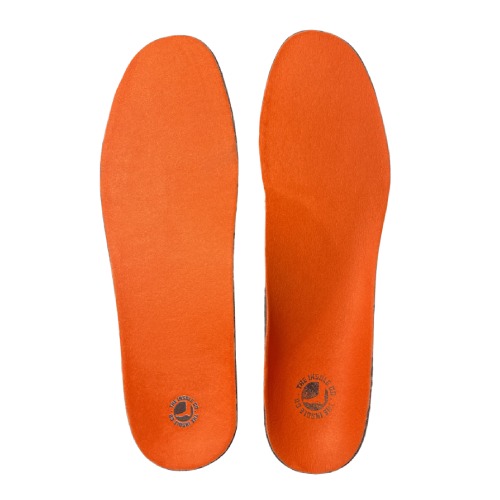
| The Insole Co. | Custom support, 3D-scanned insoles, plantar fasciitis, flat feet, high arches, knee pain, back pain, and long work shifts. | Pan-India, online + clinic | ₹2,500 to ₹8,000+ | 3D foot scan, certified orthotist, fully custom orthotics. | Custom |
| Fulton The Athletic Insole | Cork-based support, long standing comfort, and natural moulding feel. | Online, import | ₹3,500 to ₹5,500 | Cork + foam construction, sustainable design, moulds to foot shape. | OTC |
| Aetrex Premium Memory Foam Orthotics | Cushioning, everyday work shoes, and arch support for long hours. | Online, import | ₹2,800 to ₹4,500 | Deep heel cup, memory foam, and good arch profile. | OTC |
| PowerStep ComfortLast | Soft cushioning, heel comfort, and standing on hard floors. | Online, import | ₹2,500 to ₹4,000 | Plush cushioning, flexible shell, and full-length coverage. | OTC |
| VALSOLE Heavy Duty Support Insoles | Heavier users, work boots, factory workers, warehouse staff, and long shifts. | Online, import | ₹1,800 to ₹3,000 | Heavy-duty arch shell, durable foam, and boot-compatible design. | OTC |
| Tread Labs Pace Insoles | Durable arch support, replaceable top covers, and long-term use. | Online, import | ₹3,800 to ₹5,500 | Lifetime-guaranteed shell, swappable covers, and four arch heights. | OTC |
| Redi-Thotics Flex Orthotic Insoles | Overpronation, flat feet, and structured support. | Online, import | ₹2,000 to ₹3,500 | Flex shell, anti-pronation design, and good heel stability. | OTC |
| Protalus M-100 Insoles | Alignment support, heel stability, walking, and standing comfort. | Online, import | ₹3,000 to ₹5,000 | Tri-planar technology for whole-body alignment. | OTC |
| Currex WorkPro Insoles | Work footwear, breathable comfort, and alternating walking and standing. | Online, import | ₹3,200 to ₹5,000 | Dynamic arch concept, moisture management, and work-shoe fit. | OTC |
| Dr. Scholl's Comfort & Energy Work Insoles | Budget-friendly work comfort, tired feet, and basic cushioning. | Online + retail | ₹900 to ₹1,800 | Widely available, affordable, foam + gel cushioning. | OTC |
| Scholl GelActiv Work Insoles | Gel cushioning, formal shoes, work shoes, and entry-level comfort. | Online + retail | ₹700 to ₹1,500 | Slim gel profile, fits formal shoes, and easy to find. | OTC |
Best Insoles by Foot Issue and Use Case
Different foot conditions and work environments call for different types of support. The table below matches common foot issues and standing-related goals with the most suitable insole options.
| Foot Issue or Goal | What Works Best | Suitable Options | Special Features |
|---|---|---|---|
| General standing comfort | Full-length cushioning with moderate arch support | The Insole Co., Aetrex Premium Memory Foam, Dr. Scholl's Comfort & Energy Work | Pressure relief, reduced fatigue, everyday comfort |
| Heel pain from standing | Deep heel cup with cushioning | The Insole Co., PowerStep ComfortLast, Protalus M-100 | Heel stability, rear-foot support, shock absorption |
| Plantar fasciitis | Firm arch support with heel offloading | The Insole Co., Tread Labs Pace, Redi-Thotics Flex | Arch support, fascia strain reduction, better morning comfort |
| Flat feet | Structured arch and pronation control | The Insole Co., Redi-Thotics Flex, VALSOLE Heavy Duty | Overpronation control, better alignment, medial arch support |
| High arches | Cushioned arch filling and shock absorption | The Insole Co., Fulton The Athletic Insole, Aetrex Premium Memory Foam | Pressure distribution, arch gap support, cushioning |
| Knee pain linked to foot mechanics | Biomechanical assessment and corrective support | The Insole Co., Protalus M-100, Tread Labs Pace | Alignment support, gait correction, load redistribution |
| Lower back pain from standing | Custom arch support and pressure mapping | The Insole Co., Protalus M-100, Currex WorkPro | Better kinetic-chain alignment, long-shift comfort |
| Walking and standing all day | Balanced cushioning and support | The Insole Co., Currex WorkPro, PowerStep ComfortLast | Suitable for movement plus static standing |
| Sweaty feet in Indian weather | Breathable top cover and moisture control | The Insole Co., Currex WorkPro, Scholl GelActiv Work | Moisture management, odour control, warmer-climate comfort |
| Long shifts on hard floors | Compression-resistant cushioning | The Insole Co., VALSOLE Heavy Duty, PowerStep ComfortLast | Hard-floor shock reduction, durable support |
| Work boots or safety shoes | Heavy-duty support and stable heel base | The Insole Co., VALSOLE Heavy Duty, Tread Labs Pace | Boot compatibility, strong arch shell, durable design |
| Formal work shoes | Slimmer profile support | The Insole Co., Scholl GelActiv Work, Aetrex Premium Memory Foam | Lower-volume fit, comfort without overcrowding |
How to Choose the Right Insoles for Standing All Day
1. Cushioning and Shock Absorption
Standing on hard floors, whether that is a hospital corridor, a classroom, a retail floor, a restaurant kitchen, or a factory, creates significant pressure buildup in the heel, forefoot, and arch even without running or sports-level impact. Unlike walking, which distributes load through a rolling gait cycle, standing keeps the same pressure points loaded for extended periods.
When evaluating cushioning for insoles for standing all day, look for:
• Multi-density foam that provides both softness under the heel and firmness under the arch
• Gel or heel padding to absorb localised heel pressure
• Compression-resistant cushioning that maintains support through a full work shift and does not flatten quickly
• Full-length coverage to spread load across the entire foot rather than just the heel
• Pressure distribution design that reduces peak pressure under the metatarsal heads
For personalised guidance on cushioning requirements, consult a certified orthotist, physiotherapist, podiatrist, or foot health specialist, particularly if existing footwear has not resolved your discomfort.
2. Arch Support Type
Arch support is one of the most important factors when choosing good insoles for standing all day. The arch acts as the foot’s natural shock absorber and load distributor. When it is unsupported during long shifts, pressure transfers to the heel, knee, and lower back.
- Flat feet (low or collapsed arches) need structured arch support that controls overpronation and prevents the foot from rolling inward under load
- High arches need cushioned arch filling that bridges the gap between the foot and the insole, distributing pressure that would otherwise concentrate at the heel and ball of the foot
- Neutral arches need balanced support that maintains alignment without overcorrecting
- Poor arch support is a leading contributor to heel pain, knee strain, and lower back discomfort in people who stand for most of the day
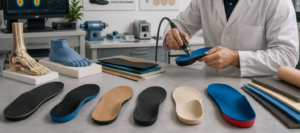
Arch type can be assessed through a visual foot examination, 2D or 3D foot scan, gait analysis, or pressure mapping. The Insole Co. uses 3D scanning and orthotist assessment to determine the correct arch profile for each individual.
3. Heel Support and Pressure Relief
Heel pain is one of the most frequently reported complaints among people who stand all day. The heel bears the majority of the body’s weight during standing, and prolonged loading without adequate support can lead to plantar fasciitis, heel fat-pad syndrome, and generalised rear-foot pain.
When evaluating heel support in shoe insoles for standing all day, look for:
- A deep heel cup that cradles and stabilises the heel fat pad
- Heel cushioning that absorbs pressure without bottoming out
- Plantar fascia support that reduces tension along the fascia from heel to arch
- Rear-foot stability that prevents excessive heel movement inside the shoe
- Shock absorption under the heel to reduce the impact of each step or weight shift
4. Fit Inside Work Shoes
The best insoles for standing all day are of limited value if they do not fit properly inside the work footwear being worn. Insoles must work inside sneakers, formal shoes, safety shoes, clogs, sandals, and work boots without overcrowding the toe box or creating pressure points.
Consider the following before purchasing:
• Full-length insoles replace the existing shoe liner and provide the best coverage, but may be too thick for slim formal shoes
• Three-quarter length insoles sit under the arch and heel only and are often better suited to formal footwear or shoes with limited internal space
• Thickness matters because a thicker insole moves the foot higher in the shoe and can create pressure at the toe box or heel counter
• Most OTC insoles include trimming lines that allow them to be cut to the correct length
• Always check compatibility with the specific type of work footwear before buying, especially for safety boots or narrow formal shoes
5. Breathability and Moisture Control
This factor is particularly relevant for the Indian market. Long work shifts already generate sweat, and India’s warm and humid climate in many regions amplifies moisture buildup inside shoes. Insoles that trap heat and moisture can cause odour, skin irritation, and fungal problems over time.
- Breathable top covers allow airflow and reduce heat buildup
- Anti-odour and moisture-wicking materials keep the foot environment drier and more hygienic
- Insoles should be easy to clean or replace, especially in environments such as hospitals, kitchens, and salons where hygiene matters
- Perforated foam or open-cell foam constructions improve ventilation compared to solid foam bases
6. When Custom Insoles Make More Sense
Over-the-counter insoles are suitable for mild comfort improvements, but custom insoles are more appropriate when pain is recurring, when foot mechanics are complex, or when standard sizes do not address the individual’s specific load pattern.
Consider a custom insole assessment if you have:
- Standing-related heel pain that has not improved with standard footwear
- Plantar fasciitis with persistent morning pain or arch discomfort
- Flat feet with overpronation that causes inward rolling of the ankle
- High arches with concentrated pressure under the heel and ball of the foot
- Knee pain that appears to be linked to how your foot contacts the ground
- Lower back pain that worsens after long periods of standing
- Diabetes, which requires careful pressure management to prevent foot complications
- Post-surgical feet that need offloading or redistributed support
- Uneven pressure or one-sided pain suggesting a leg-length or alignment issue
- Long work shifts on hard floors in hospitals, factories, kitchens, or retail environments
How to Choose the Best Shoe Insoles for Standing All Day
Use the table below as a structured buying guide when comparing the best shoe insoles for standing all day. Each factor is explained in the context of long working hours and the Indian footwear environment.
| Buying Factor | Why It Matters for Standing All Day | What to Check Before Buying |
|---|---|---|
| Cushioning | Reduces pressure buildup on heels and forefoot during long shifts on hard floors | Multi-density foam, gel padding, compression resistance, full-length coverage |
| Arch support | Distributes weight across the foot and reduces heel, knee, and back strain | Match to your arch type: flat, neutral, or high; check shell firmness |
| Heel cup | Contains the heel fat pad, absorbs impact, and reduces rear-foot pain | Depth of heel cup, cup shape, and cushioning material underneath the heel |
| Pressure distribution | Spreads load evenly to prevent hot spots and fatigue | Full-length design, contoured footbed, forefoot cushioning |
| Shoe fit | An overly thick insole can crowd the toe box and cause discomfort | Check insole length and thickness; look for trimming lines if needed |
| Breathability | Long work shifts in Indian heat and humidity cause sweat and odour | Moisture-wicking top cover, anti-odour treatment, washable or replaceable cover |
| Custom vs OTC | OTC suits mild fatigue; custom is better for recurring pain or complex foot mechanics | Ask if a foot assessment is included; check if insole is shaped to your foot |
| Lifespan | Insoles compress over time and lose support; frequent standing accelerates this | Check expected lifespan; ask if top covers can be replaced without replacing the shell |
| Material quality | Material affects cushioning durability, breathability, and hygiene | EVA foam, cork, polyurethane, gel pods; avoid low-density foams that compress quickly |
| Support for walking and standing | People in motion need cushioning that handles both static load and stride | Look for insoles described as suitable for the best insoles for walking and standing all day, with balanced arch and forefoot support |
Conclusion
The best insoles for standing all day depend on your foot type, work shoes, daily routine, and level of discomfort. OTC insoles can help with mild fatigue and basic cushioning, while custom insoles may be better for persistent heel pain, plantar fasciitis, flat feet, high arches, knee pain, or lower back pain.
For people who spend long hours standing at work, the right insoles can reduce pressure, support the heel and arch, and make each shift more comfortable. They are not just an accessory, but a practical way to protect your feet and improve daily comfort.