Key Takeaways
- Memory foam insoles are softer and conform closely to the foot, making them better for everyday comfort and casual wear.
- Gel insoles absorb shock more effectively, making them a better fit for running, sports, and high impact activity.
- Neither material offers structural arch support or corrects biomechanical issues like overpronation.
- Gel insoles generally last longer and resist compression better than memory foam.
- For chronic conditions such as plantar fasciitis, flat feet, or persistent joint pain linked to foot mechanics, custom insoles provide support that cushioning alone cannot.
The right choice between memory insoles and depends on your daily activity level and the type of foot discomfort you are managing. Memory foam insoles mould closely to the shape of your foot and feel soft underfoot. Gel insoles absorb shock more effectively and hold their shape better over time. Neither corrects the underlying mechanics of how your foot moves.
Table of Contents
Memory Foam vs Gel Insoles: Key Differences
| Feature | Memory Foam Insoles | Gel Insoles |
|---|---|---|
| Primary Purpose | Cushioning and pressure relief | Shock absorption and impact protection |
| Comfort Level | Very soft and plush | Soft with responsive cushioning |
| Support | Limited structural support | Moderate support |
| Shock Absorption | Good | Excellent |
| Durability | Moderate | High |
| Heat Retention | Can retain heat | Generally cooler |
| Best For | Daily comfort, casual wear | Active users and high-impact activities |
| Arch Support | Usually minimal | Usually minimal to moderate |
| Foot Fatigue Relief | Good | Very good |
| Running and Sports | Limited suitability | Better suited |
| Plantar Fasciitis | May provide temporary comfort | May help with impact reduction |
| Long-Term Biomechanical Correction | No | No |
What Are Memory Foam Insoles?
Definition
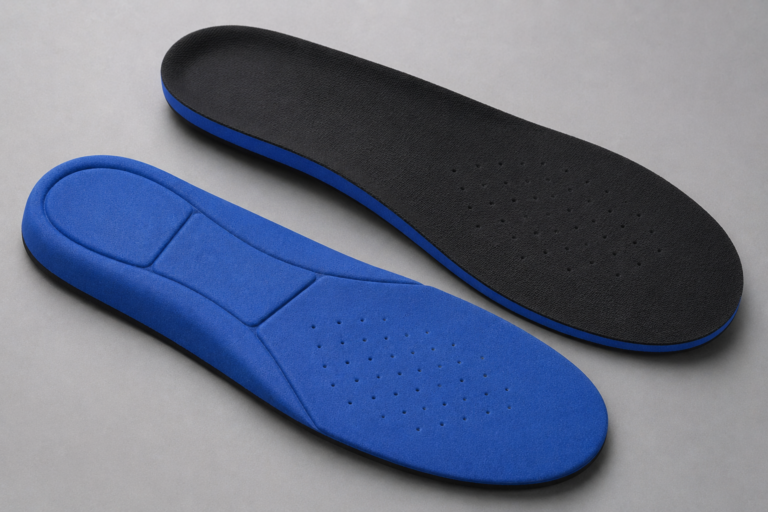
Memory foam insoles are made from a viscoelastic foam material that softens with body heat and pressure, then slowly returns to its original shape once the pressure is removed. This is the same material used in mattresses and pillows, adapted for footwear.
How Memory Foam Works
When you stand or walk, the warmth and weight of your foot cause the foam to compress and conform closely to the contours of your sole. This creates a custom-feeling impression of your foot shape, though it is not truly customized since it adjusts in real time rather than being built from your specific measurements.
Main Benefits
Memory foam insoles feel soft and plush underfoot. They reduce pressure points by spreading body weight across a larger surface area and tend to feel comfortable almost immediately, with little to no break in period.
Common Uses
Memory foam insoles are popular for everyday shoes, work boots, and casual footwear where comfort matters more than performance. They are commonly used by people who want extra cushioning without a major change to how their shoes fit.
What Are Gel Insoles?
Definition
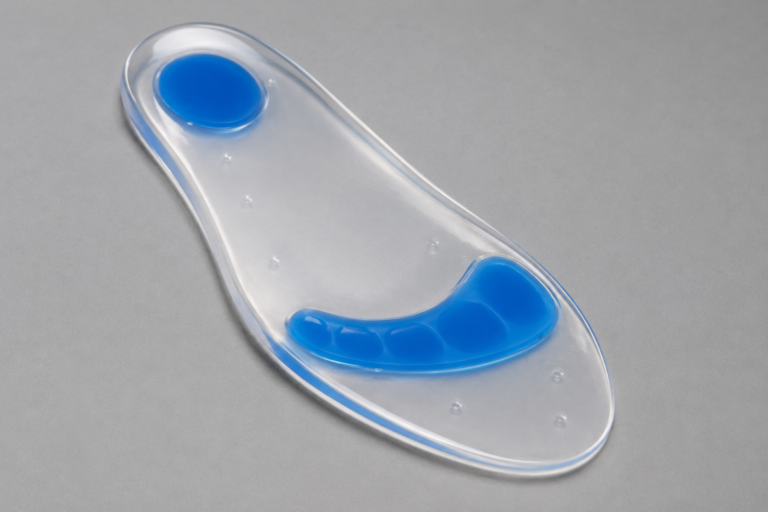
Gel insoles use silicone or polymer based gel pads, often placed strategically in the heel and forefoot, to absorb impact during movement.
How Gel Cushioning Works
Gel compresses on impact and then pushes back, dissipating shock energy rather than simply softening underfoot. This responsive cushioning behaves differently from memory foam, which slowly conforms rather than actively absorbing force.
Main Benefits
Gel insoles excel at shock absorption, which makes them effective for reducing the impact that travels through the foot, ankle, and knee during walking, running, or jumping. They also tend to stay cooler than memory foam since gel does not trap heat the same way.
Common Uses
Gel insoles are commonly used in athletic shoes, work boots for people on hard concrete floors, and footwear designed for higher impact activities like running or sports.
Benefits of Memory Foam Insoles
Memory foam insoles offer several advantages for everyday use. They relieve pressure by distributing body weight evenly across the sole rather than concentrating it on a few points. The soft cushioning feels comfortable from the first wear, with no break in period needed. For people on their feet for long stretches in casual or work shoes, memory foam reduces general foot fatigue and makes standing more tolerable throughout the day.
Benefits of Gel Insoles
Gel insoles bring a different set of advantages, centered on shock absorption. They reduce the force that travels up through the foot with every step, which becomes more important during running or other high-impact activity. Better impact protection also means less repetitive stress reaching the knees and hips over time. For people who play sports or train regularly, gel insoles can meaningfully reduce strain compared to standard shoe cushioning.
Memory Foam vs Gel Insoles for Standing All Day
People who stand for most of their shift, including retail staff, healthcare workers, and factory employees, deal with a different kind of stress than runners or athletes. The pressure is constant rather than sudden, and fatigue tends to build slowly over hours rather than spike with each step.
Memory foam tends to perform well here because it conforms to the foot and spreads pressure evenly across a stationary stance. Gel insoles still help, particularly in the heel and forefoot where pressure concentrates during long periods of standing, but the difference between the two is smaller for static standing than it is for dynamic movement like running. Either option reduces fatigue compared to a standard factory insole, though neither resolves pain caused by an underlying issue like flat feet or overpronation.
Memory Foam vs Gel Insoles for Plantar Fasciitis
Plantar fasciitis causes sharp heel pain, often worst during the first steps in the morning, due to inflammation of the tissue connecting the heel to the front of the foot. Both memory foam and gel insoles can offer some relief by cushioning the heel, but neither addresses the arch support or alignment correction that often drives the underlying inflammation.
Memory foam may feel more soothing initially because of how closely it cushions the heel. Gel can help reduce the impact that aggravates the fascia during walking. For mild, occasional discomfort, either may be enough. For persistent or recurring plantar fasciitis, additional arch support designed around your specific foot shape is usually necessary, since cushioning alone does not reduce the tension on the plantar fascia the way targeted support does.
Memory Foam vs Gel Insoles for Running and Sports
Durability and impact protection both matter more during running and sports than they do for casual daily wear. Gel insoles are generally the better choice here because they hold their shock-absorbing properties longer under repeated impact, while memory foam tends to compress and lose its responsiveness faster under high-frequency stress.
Performance also differs in how the materials feel during movement. Gel responds quickly to each footstrike, which suits the repetitive, high-impact nature of running. Memory foam feels comfortable but can feel slightly sluggish under fast, repeated motion since it takes a moment to compress and rebound. For athletes managing chronic foot issues alongside training, sport-specific custom insoles often outperform either generic material since they address gait patterns directly rather than only cushioning impact.
Which Insole Lasts Longer?
Gel insoles generally last longer than memory foam under regular use. Gel resists compression better over time, so it tends to retain its shock-absorbing properties for longer before needing replacement. Memory foam compresses gradually with repeated use and body heat, which can reduce its cushioning effect months before it visibly wears out.
Most off the shelf memory foam insoles need replacing every six to twelve months with regular use, while gel insoles can often last slightly longer depending on activity level and the quality of the material. For comparison, well-made custom insoles built from more durable materials like EVA foam or carbon fiber typically last one to three years, since they are designed for structural support rather than cushioning alone.
Limitations of Both Memory Foam and Gel Insoles
Both materials share the same core limitation: they are not built around your specific foot shape or walking pattern. This means neither offers meaningful arch support, and neither corrects biomechanical problems such as overpronation, flat feet, or uneven pressure distribution.
Cushioning can mask discomfort temporarily, but it does not change how your foot strikes the ground or how weight moves across it. For general fatigue or minor aches, this is not a problem. For chronic or recurring foot pain, relying on cushioning alone often means the underlying cause continues unaddressed. This is the main reason orthotics and custom shoe inserts exist as a separate category from standard comfort insoles.
When Should You Consider Custom Insoles?
Custom insoles are built from your own foot measurements and gait pattern rather than a generic mold, which allows them to correct mechanics rather than just cushion the surface. A few situations where memory foam or gel insoles usually fall short include the following.
Flat feet need arch support that conforms to the collapsed arch and redistributes pressure away from strained tendons, something neither memory foam nor gel is designed to provide.
Overpronation requires correcting the angle at which the foot rolls inward during each step, which depends on structural support rather than cushioning.
Chronic heel pain, including heel spurs, often needs targeted pressure relief built around the exact location of discomfort rather than generic heel padding.
Persistent foot pain that does not improve with store-bought insoles after a few weeks usually signals a biomechanical issue that cushioning cannot resolve on its own.
Knee, hip, and lower back discomfort connected to foot mechanics often improves once the root alignment issue is corrected, since poor foot mechanics tend to create compensatory strain further up the body.
Frequently Asked Questions
1: Are memory foam insoles better than gel insoles?
Neither is universally better. Memory foam suits everyday comfort and casual wear, while gel suits higher impact activity and shock absorption. The right choice depends on your daily activity level and the type of foot discomfort you are managing.
2: Which is better for plantar fasciitis?
Both offer only temporary relief for plantar fasciitis since neither corrects arch support or alignment. Gel may reduce some of the impact that aggravates the condition, but persistent cases usually need targeted arch support beyond basic cushioning.
3: Which is better for standing all day?
Memory foam tends to perform slightly better for prolonged standing since it conforms to a stationary foot and spreads pressure evenly. Gel still helps, especially in the heel, but the difference is smaller for standing than for dynamic movement.
4: Which lasts longer?
Gel insoles generally last longer than memory foam because gel resists compression better over time. Memory foam tends to flatten and lose cushioning effectiveness sooner with regular use.
5: Are memory foam insoles good for running?
Memory foam is not the best choice for running since it compresses under repeated high-impact strikes and feels less responsive than gel during fast, repetitive motion. Gel insoles or sport-specific custom insoles are generally better suited for running.
6: Can gel insoles help foot pain?
Gel insoles can reduce some types of foot pain caused by repetitive impact, such as general fatigue or mild heel discomfort. They are less effective for pain caused by structural issues like flat feet or overpronation, which require corrective support rather than cushioning alone.