The difference between a custom insole and an over-the-counter orthotic goes well beyond price. Custom insoles are designed around your individual foot structure, arch height, and gait pattern after a clinical assessment. OTC orthotics are prefabricated to fit the average foot and provide general cushioning and arch support without any personalisation.
Choosing the wrong type does not just waste money. It can delay relief or, in some cases, worsen existing biomechanical issues. This guide covers who each option is suited for, how they compare on support, cost, and longevity, and how to make the right call for your feet.
The Difference Between Custom Insoles and OTC Orthotics
Many people assume both products do the same job because they both sit inside a shoe. In practice, they are designed for different purposes and different users. Here is a table highlighting the differences
| Feature | Custom Insoles | Over-the-Counter Orthotics |
|---|---|---|
| Fit | Made specifically for your feet | Standard sizes. No customisation |
| Support | Personalized based on foot shape and gait | General arch support and cushioning |
| Best For | Chronic pain, structural conditions, long-term support | Mild discomfort, everyday wear, occasional fatigue |
| Assessment Required | Yes | No |
| Cost | More expensive due to customisation | Lower than custom orthotics |
| Suited For | Plantar fasciitis, high arches, diabetic foot conditions | General arch support and heel pain |
| Availability | Made to order | Ready to use |
| Lifespan | Generally longer | Depends on material and usage |
When Custom Insoles Make More Sense
Custom shoe inserts are typically recommended when foot pain is persistent or connected to an underlying structural issue.
They are commonly suitable for people with:
- Plantar fasciitis
- Flat feet or fallen arches
- High arches
- Overpronation or excessive inward rolling of the foot
- Recurrent heel pain
- Foot pain that returns despite changing footwear
- Uneven pressure distribution
- Sports injuries related to foot mechanics
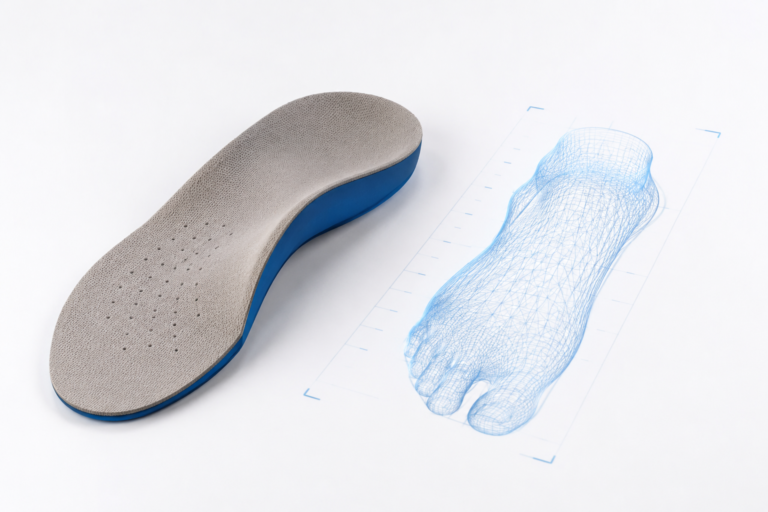
Because these insoles are shaped specifically to your feet, they can distribute pressure more evenly and provide support where your foot needs it most.
A 2023 systematic review published in the Journal of Foot and Ankle Research found that foot orthoses can reduce plantar pressure and improve pressure redistribution. The review also noted that effectiveness depends on the condition being treated, the orthotic design, and proper fitting. This is one reason why customized devices are recommended for people with more complex biomechanical needs.
Custom orthotics do however have an adjustment period which is covered in our post on how long orthotics take to work.
Custom foot insoles are not automatically the better choice for everyone. Their value comes from addressing a specific problem rather than providing general cushioning.
When Over-the-Counter Orthotics Are a Better Choice
Not every foot problem requires a custom-made solution.
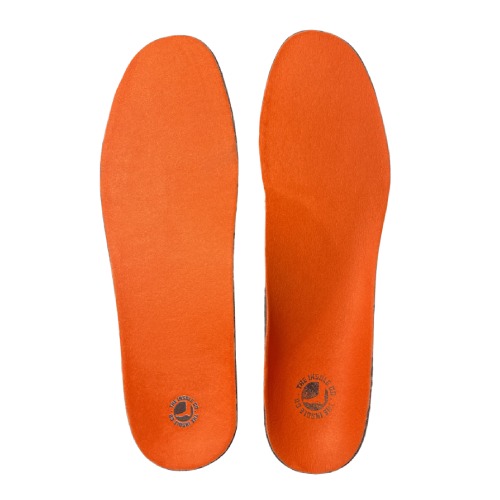
OTC insoles work well when your goal is improved comfort rather than correcting foot mechanics. They are commonly used by:
- Retail employees and teachers
- Healthcare and warehouse workers
- Frequent travellers
- Anyone spending long hours standing
- People looking for affordable everyday cushioning
Modern OTC orthotics come in different arch heights, materials, and cushioning levels, making them a practical option for many people without chronic foot conditions.
According to The Medical, prefabricated orthotics can be effective for mild discomfort because they offer immediate support at a lower cost. However, they are less suitable for individuals who need correction for structural or biomechanical issues.
If you are trying to decide which insole material suits your activity level, our comparison of memory foam vs gel insoles is a useful starting point before making a purchase.
Custom Insoles vs OTC Insoles: Which Offers Better Support?
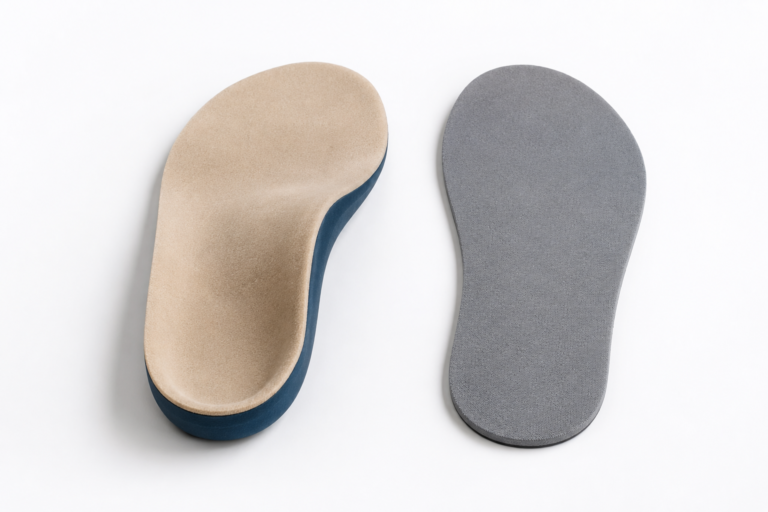
Support is often confused with cushioning, but they are not the same thing.
Cushioning absorbs impact. Support helps control how your foot moves.
A soft insole may feel comfortable when you first put it on. That does not mean it is providing the support your feet need.
| Comparison | Custom Insoles | OTC Insoles |
|---|---|---|
| Arch support | Designed for your arch specifically | Standard arch profiles |
| Pressure distribution | Personalized | General |
| Motion control | Can be incorporated into the design | Limited |
| Shock absorption | Depends on materials selected | Usually included |
| Fit | Matches your foot shape | Standard sizing |
If your discomfort is caused by poor foot mechanics, support is usually more important than additional cushioning.
Cost vs Long-Term Value
Price is the first thing most people compare. It should not be the only factor.
| Factor | Custom Insoles | OTC Orthotics |
|---|---|---|
| Initial cost | Higher | Lower |
| Personalization | Yes | No |
| Replacement frequency | Usually lower | May be more frequent |
| Long-term conditions | Suitable | Limited |
| Best suited for | Ongoing foot problems | Mild or occasional discomfort |
Someone dealing with temporary soreness after a long day may get excellent value from OTC insoles. Someone with chronic plantar fasciitis may spend more cycling through different OTC products than they would by investing in a properly fitted custom solution from the start.
Which Is The Better Option If You Are Based Out of India?
There isn’t a universally better option between custom orthotics and over the counter insoles.
Choose custom insoles if you:
- Have persistent heel or arch pain
- Have been diagnosed with plantar fasciitis, flat feet, or high arches
- Need support tailored to your foot mechanics
- Have already tried OTC insoles without improvement
- Want a long-term solution designed specifically for your feet
Choose over-the-counter orthotics if you:
- Need extra cushioning for daily activities
- Experience occasional foot fatigue
- Spend long hours standing at work
- Want immediate support without a clinical assessment
- Are looking for an affordable starting point
The right choice depends on your symptoms, your activity level, and how much support your feet actually need. The most expensive option does not guarantee better results, and the cheapest option may not address the root cause of your discomfort.
Frequently Asked Questions
Are custom insoles better than over-the-counter orthotics?
Yes. Because they are specifically made to uniquely match the countours and dimensions of your feet unlike pre-fabricated insoles. OTC orthotics are often sufficient for general comfort and mild foot fatigue while custom insoles are better suited for people with structural foot conditions or chronic pain because they are designed around individual foot mechanics.
Can OTC insoles help with plantar fasciitis?
Some people with mild plantar fasciitis experience relief with supportive OTC insoles. If symptoms persist or return, a healthcare professional may recommend custom insoles based on a foot assessment.
Between custom and OTC insoles, which lasts longer?
The lifespan depends on the materials used, activity level, and how often they are worn. Custom insoles generally last longer than standard OTC insoles when properly maintained.
Are custom shoe inserts worth the higher cost?
If you have ongoing foot pain, recurring injuries, or abnormal foot mechanics, the higher upfront investment in custom insoles often provides better long-term value than repeatedly replacing generic insoles.
Can custom insoles fit in every pair of shoes?
Most custom insoles are designed for specific shoe types. Some can be transferred between shoes with similar dimensions, while others are made for particular footwear such as athletic shoes or work boots.