Running places repetitive load through the feet, ankles, knees, hips, and spine. A recreational runner may take 6,000 to 8,000 steps in a short run. Distance runners accumulate far more. Over time, even small biomechanical inefficiencies can compound into pain, fatigue, or injury.
Insoles for runners are often suggested as a solution, but they are frequently misunderstood. Some runners use them for comfort, others for injury prevention, and some avoid them entirely due to conflicting advice.
This guide explains how running insoles actually work, who benefits from them, when they are appropriate, and how to choose the right type based on foot structure and running demands. The perspective throughout is clinical, not promotional.
Do Most Runners Use Insoles?
Most runners initially rely on the factory sock liner that comes with their shoes. For many people, this is sufficient at low to moderate training volumes. Insoles typically become relevant when one or more of the following occurs:
- Weekly mileage increases
- Recovery between runs slows
- Minor aches become repetitive
- Training includes longer runs or harder surfaces
From a podiatric standpoint, runners who benefit most from insoles are not those with “bad feet,” but those whose tissue tolerance is being exceeded by training load. Insoles help manage stress, not correct character flaws in foot structure.
What Do Insoles Actually Do for Runners?
Running insoles influence biomechanics in three primary ways:
- Load distribution
Insoles can spread pressure more evenly across the foot, reducing overload in high-risk areas such as the heel, forefoot, or medial arch. - Stability during fatigue
As muscles tire, control decreases. Insoles can help maintain alignment late in runs when form naturally deteriorates. - Interface with the shoe midsole
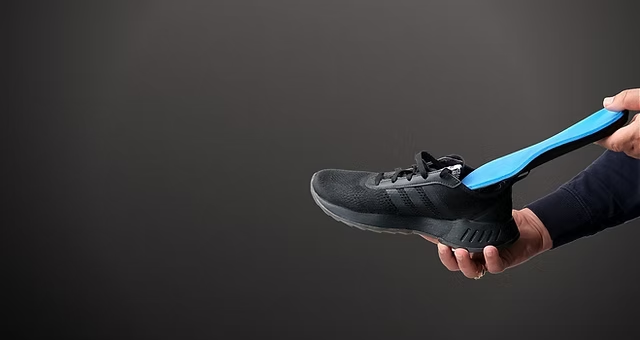
Insoles do not replace the shoe’s midsole. They fine-tune how the foot interacts with it.
Insoles are not braces. They should support movement, not restrict it.
Do Insoles Prevent Running Injuries?
Insoles do not prevent injuries in isolation. Injury risk in running is multifactorial and influenced by:
- Training volume and intensity
- Surface variation
- Shoe selection
- Strength and mobility
- Recovery habits
Clinically, insoles can reduce certain mechanical contributors to injury, particularly those related to excessive loading or poor pressure distribution. They are most effective when combined with appropriate footwear and sensible training progression.
What Insole Brand Do You Recommend for Running Shoes?
From a clinical perspective, brand selection is secondary to biomechanical match. A running insole should sit securely inside the shoe, provide consistent support under load, and remain comfortable over longer distances. What works for one runner may not suit another, as foot structure, gait, and shoe design vary significantly.
Commonly used running insole brands include:
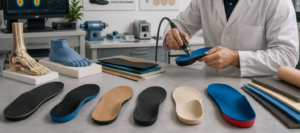
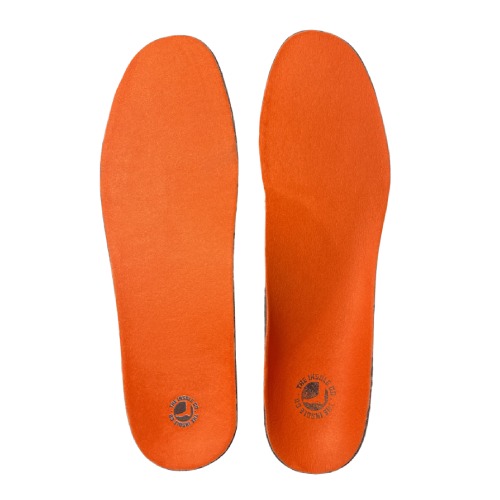
- The Insole Company – Custom insoles made using 3D foot scans and gait assessment for runners with specific support needs.
- Frido – Cushioned insoles designed for everyday comfort and light to moderate running.
- Cult Store Running Insoles – Breathable, contoured inserts aimed at reducing impact fatigue.
- Dr. Ortho – Shock-absorbing insoles focused on heel and forefoot comfort.
- Superfeet – Structured running insoles offering arch support and heel stability.
Key Differences Between Cushioning and Supportive Insoles
Feature | Cushioning Insoles | Supportive Insoles |
Primary role | Shock absorption | Stability and alignment |
Arch structure | Minimal to none | Structured |
Heel control | Limited | Moderate to high |
Best for | High-impact sensitivity, high arches | Overpronation, flat feet |
Adaptation time | Immediate | Gradual |
Risk if misused | Bottoming out | Overcorrection |
Insoles for Flat Feet When Running
Flat feet vary significantly. Flexible flat feet behave very differently from rigid flat feet.
For runners with flexible flat feet, excessive pronation during stance can increase strain on:
- Plantar fascia
- Achilles tendon
- Medial knee structures
Insoles with structured arch support and heel stability can improve load distribution and reduce tissue stress. However, aggressive correction introduced too quickly can cause discomfort. Adaptation should be gradual.
Insoles for High Arches and Supination
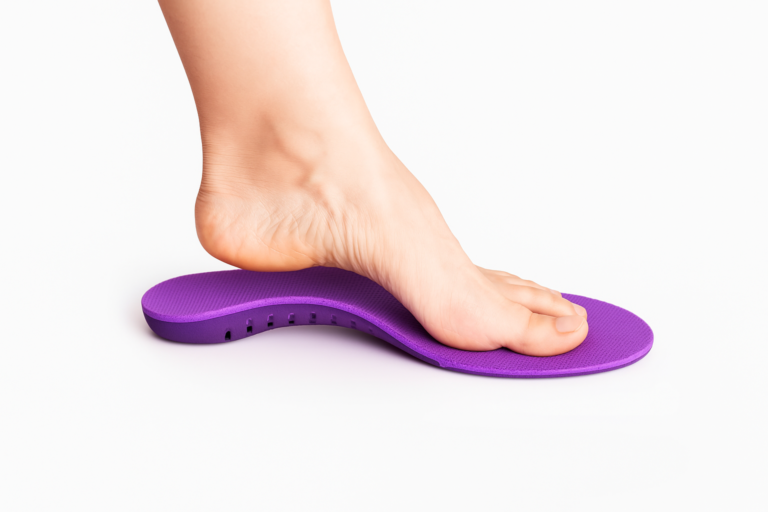
High-arched runners often struggle with impact absorption rather than instability. The foot tends to remain rigid during stance, increasing load on the heel and forefoot.
For these runners:
- Cushioning is often more important than control
- Excessive arch support can worsen lateral foot loading
- Moderate stability combined with shock absorption is preferable
The goal is not to force pronation, but to reduce repetitive impact stress.
Over-the-Counter Running Insoles vs Custom Running Insoles
Aspect | Over-the-Counter Insoles | Custom Running Insoles |
Fit | Generic sizing | Individual foot-specific |
Assessment | None | Gait and pressure analysis |
Cost | Lower | Higher |
Best for | Mild discomfort, fatigue | Persistent or recurrent pain |
Adaptability | Limited | High |
Longevity | Moderate | Higher when well-made |
How Long Do Running Insoles Last?
Most running insoles last between 500 and 900 miles, depending on material, surface, and runner weight. Cushioning compresses gradually, often before visible damage appears.
Common signs that replacement is needed:
- Loss of rebound when pressed
- Uneven wear or distortion
- Return of previously managed discomfort
Running insoles should be reviewed regularly, just like running shoes.
Common Mistakes Runners Make With Insoles
- Switching to rigid support too quickly
- Using insoles to compensate for worn-out shoes
- Choosing thickness without considering shoe volume
Ignoring discomfort during early adaptation.
Final View
Insoles for runners are a load-management tool, not a cure-all. When selected thoughtfully, they can improve comfort, support consistency, and reduce stress on vulnerable tissues. When chosen poorly, they can create new problems.
The most effective use of insoles respects individual biomechanics, shoe design, and training demands. Runners experiencing ongoing pain should prioritise assessment over experimentation.
Consistency in training comes from managing stress, not chasing fixes.