The most common types of flat foot include flexible flatfoot, flexible flat with tight achilles, rigid flatfoot, adult acquired flatfoot & congenital flatfoot (flatfoot from birth). The type of flat foot matters because causes, symptoms, and treatment methods can be very different. Cleveland Clinic notes that many people have flat feet from childhood, while others may lose their arch over time due to a condition.
Different types of flat feet at a glance
| Type | What it looks like | Quick check at home | Common causes | Often causes pain? | What usually helps (treatment) |
|---|---|---|---|---|---|
| Flexible flatfoot | Arch shows when sitting, flattens when standing | Arch appears when sitting or on tiptoes | Loose ligaments, common childhood pattern | Usually no, unless overworked | Supportive shoes, optional insoles, basic foot strengthening |
| Flexible flatfoot with tight Achilles | Flatfoot plus tight calf or heel cord | Heel feels tight, ankle bends forward less | Tight Achilles with flexible flatfoot | More likely yes, especially with activity | Calf and Achilles stretches, supportive shoes, insoles, gradual strengthening |
| Rigid flatfoot | Arch stays flat even when sitting | Arch does not appear on tiptoes, foot feels stiff | Bone or joint causes, arthritis, tarsal coalition | Often yes | Clinical evaluation, supportive footwear, custom insoles, physio plan, imaging if needed |
| Adult acquired flatfoot | Arch gradually collapses in adulthood, foot rolls inward | Often starts on one side, pain on inner ankle or arch | Tendon weakness on inner ankle, ligament strain | Commonly yes, can worsen over time | Early assessment, custom insoles, supportive shoes, physio, activity changes, brace in some cases |
| Congenital vertical talus | Flatfoot from birth, stiff "rocker bottom" shape | Present from birth, foot feels rigid | Bone alignment present at birth | Not early, but can cause problems later | Pediatric specialist care, early correction plan, casting or surgery depending on severity |
How flat feet are classified
Doctors usually sort flat feet in two simple ways.
First, they check movement. If your arch shows up when you sit or stand on tiptoes but flattens when you stand normally, it is generally called flexible flat feet. If the arch stays flat all the time, even when you are off the foot, it is generally called rigid flat feet.
Second, they check the timing. Some people have flat feet from childhood and stay that way without problems. Others develop a flatter arch later in life, which can be a sign that the foot’s support system is weakening over time.
1) Flexible flat feet
This is the most common type. The arch can look normal when you are sitting or when you rise up on your toes, but it drops when you put full weight on the foot.
You might notice the foot rolling inward, especially when walking or standing for long hours. Many people feel no pain at all, and it is often seen in children because arches can develop gradually as they grow. If symptoms show up, comfort usually improves with supportive footwear, simple strengthening, and sometimes insoles.
2) Flexible flat feet with a tight heel cord
Some people have flexible flat feet plus a tight Achilles tendon or tight calf muscles. The arch still returns in certain positions, but the tightness makes the foot work harder during walking and running.
This matters because tight calves can increase strain through the arch and heel. People with this pattern often feel pain sooner, especially with sports, long standing, or weight gain. Stretching and gradual strengthening are usually part of the plan.
3) Rigid flat feet
Rigid flat feet means the arch stays flat whether you are standing, sitting, or on tiptoes. This type is more likely to be linked to a structural issue inside the foot, so it usually needs a proper assessment.
A common reason is that two bones in the foot are partly connected when they should move separately. That can make the foot stiff and sore, especially during activity. People may also have repeated ankle sprains because the foot does not adapt well to uneven ground.
4) Flat feet that develop in adulthood
Some adults start with a normal arch and then notice it collapsing over months or years. Often, one foot changes first. This can happen when a key tendon and supporting tissues on the inner side of the ankle become irritated or weak.
Typical signs are pain or swelling along the inside of the ankle or arch, the foot rolling inward more than before, and the front of the foot slowly turning outward. This pattern can worsen if ignored, so early guidance is useful.
5) A rare flatfoot present from birth
A small number of babies are born with a stiff flatfoot shape caused by unusual bone alignment. The foot may look curved on the bottom and feel rigid. It may not hurt in early childhood, but treatment is important because it can affect walking and comfort later.
How to tell your type in about a minute
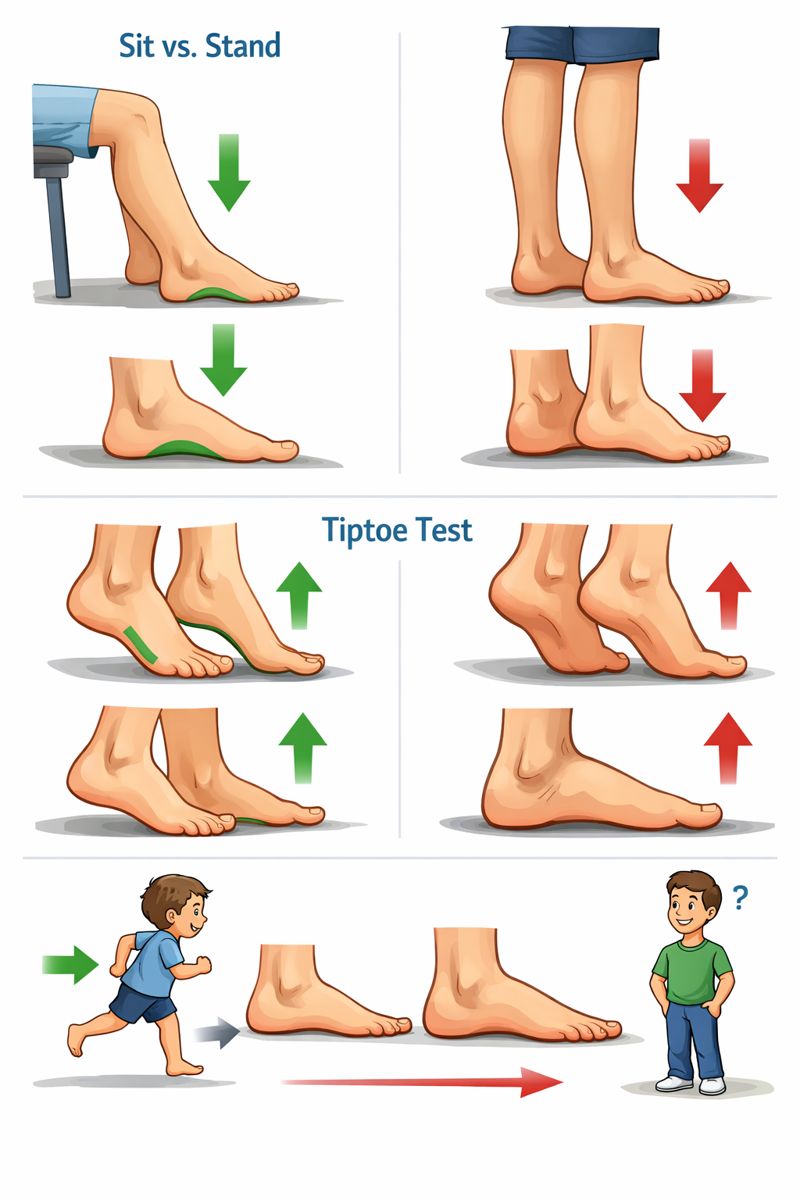
This is not a diagnosis, it just helps you describe what you see.
- Sit vs stand: if your arch looks higher when sitting but flattens when standing, it usually suggests a flexible type.
- Tiptoe test: stand and rise onto your toes, if an arch forms it usually suggests flexible, if it stays flat and feels stiff it can suggest rigid.
- When it started: if it has been the same since childhood it is often flexible, if the arch has dropped recently in adulthood, especially on one side, it is worth getting checked.
India specific data
- In a Gujarat study of 500 Indian adults aged 18 to 21, flexible flatfoot prevalence was 13.6% (12.8% males, 14.4% females) using a navicular drop test.
- In a hospital based Indian study of 150 symptomatic patients, 96 had severe flatfoot (foot print index >75) and combining foot exercises plus footwear modifications had the best outcomes among tested conservative options. (ResearchGate)
When to see a clinician
Seek assessment if you have:
- New arch collapse in adulthood
- Persistent pain, swelling, or limping
- One foot changing shape faster than the other
- Stiffness with a flatfoot that does not improve on tiptoes