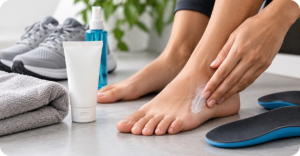
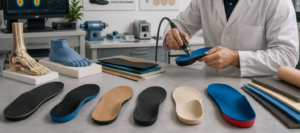
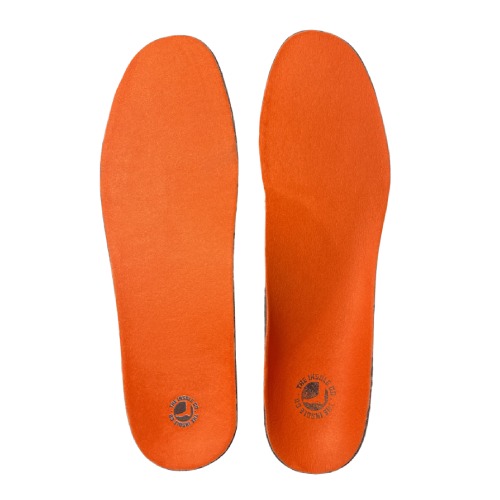
Before starting, always remove the insoles from your shoes. Cleaning them while they are still inside traps moisture and does not remove dirt effectively.
- Brush off loose dirt
Use a soft brush to remove surface dust. This prevents dirt from spreading during cleaning. - Prepare a mild cleaning solution
Mix lukewarm water with a small amount of gentle soap. - Clean the surface gently
Use a cloth or soft brush to lift dirt without applying too much pressure. - Avoid soaking the insoles
Excess water can weaken the structure and affect cushioning. - Remove excess moisture
Wipe the insoles with a clean cloth after cleaning. - Let them air dry completely
Place them in a well-ventilated area and avoid direct sunlight or heat.
This method works for most everyday insoles and helps maintain their structure. Refer to this excellent guide by the DNA Show on how to deep clean your insoles.
Insole Cleaning Guide by Material
Not all insoles react the same way to cleaning. Understanding the material helps avoid damage and improves longevity.
| Material Type | How It Reacts to Cleaning | Recommended Method | Key Caution |
|---|---|---|---|
| EVA Foam | Absorbs water easily | Light scrub with damp cloth | Avoid soaking |
| Gel Insoles | Non-absorbent but delicate | Wipe only with cloth | Avoid pressure |
| Memory Foam | Retains water | Spot clean only | Can lose shape if wet |
| Non-removable Insoles | Cannot be fully submerged | Wipe with a damp cloth and mild soap | Air dry completely before wearing |
| Sneaker Insoles | Sweat and dirt build-up | Wipe with mild soap | Air dry fully |
| Leather | Sensitive to moisture | Damp cloth with leather cleaner | Can crack if over-dried |
| Fabric | Absorbs sweat and odour | Gentle hand wash | Needs thorough drying |
| Cork Insoles | Natural and porous | Light wipe only | Avoid water exposure |
| Orthotics | Structured and supportive | Surface cleaning only | Do not submerge |
How to Clean Smelly Insoles Properly
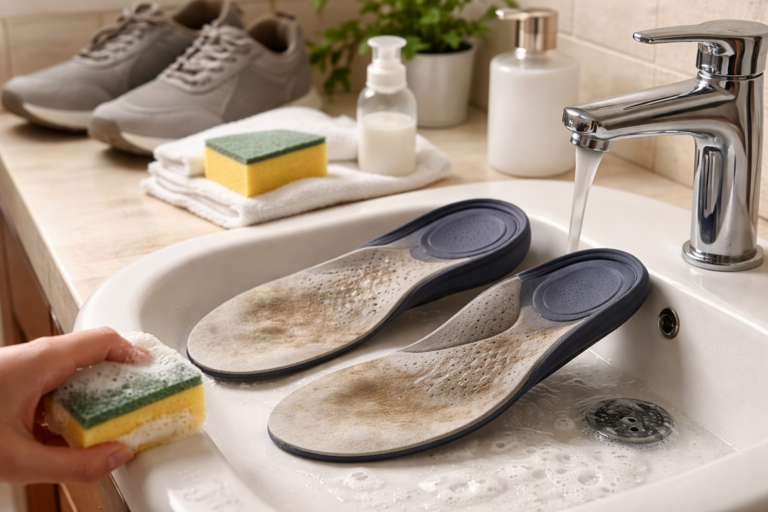
If your insoles still smell after cleaning, it usually means bacteria has built up inside the material.
In such cases, deodorising becomes just as important as cleaning. The focus should be on removing moisture and controlling bacterial growth.
What Works Well
- Baking soda treatment
Sprinkle baking soda over the insoles and leave it overnight. It absorbs moisture and neutralises odour - Vinegar wipe
Use a diluted vinegar solution to lightly wipe the surface and reduce bacteria - Proper drying
Always allow insoles to dry completely in a ventilated area
What many people overlook is that moisture is the main reason odour returns. Even slightly damp insoles can start smelling again within hours. Complete drying is what makes the process effective.
How to Wash Orthotics Safely
Orthotics are designed to support your foot structure, so they require more careful handling compared to regular insoles.
Instead of washing them under running water, it is better to use a damp cloth with mild soap to clean the surface. Focus on areas that come into direct contact with your foot. Once cleaned, wipe off any excess moisture and leave them to dry naturally.
There are a few important points to keep in mind:
- Do not soak them in water as this can damage their structure
- Avoid heat exposure, including sunlight or dryers
- Use only mild soap to prevent material breakdown
- Always air dry completely before reuse
Following these steps helps maintain the support and durability of your orthotics.
How to Clean Sneaker Insoles
Most sneaker insoles can be cleaned using the same gentle method as regular insoles. Remove them from the shoes if possible, brush away loose dirt, and wipe both sides with a soft cloth dampened with lukewarm water and a small amount of mild soap. Avoid soaking the insoles, especially if they contain memory foam or glued layers.
Once cleaned, remove excess moisture with a dry towel and allow the insoles to air dry completely before placing them back in your sneakers. Avoid direct sunlight, heaters, or tumble dryers, as excessive heat can damage the material and reduce cushioning.
Quick tips
- Remove the insoles before cleaning whenever possible.
- Use mild soap and a soft cloth or sponge.
- Never machine wash unless the manufacturer specifically recommends it.
- Let the insoles dry completely before putting them back into your shoes.
Cleaning Frequency Guide
Cleaning does not need to be daily, but it should be consistent.
| Item | Recommended Frequency |
|---|---|
| Insoles | Every 1 to 2 weeks |
| Smelly Insoles | Weekly treatment |
| Orthotics | Light cleaning every 1 to 2 weeks |
Regular maintenance is more effective than occasional deep cleaning
Common Mistakes to Avoid
While cleaning insoles seems simple, a few mistakes can reduce their lifespan:
- Using too much water
- Scrubbing too aggressively
- Drying under direct heat
- Not allowing proper drying time
Avoiding these helps maintain both comfort and durability.
Simple Ways to Keep Insoles Fresh
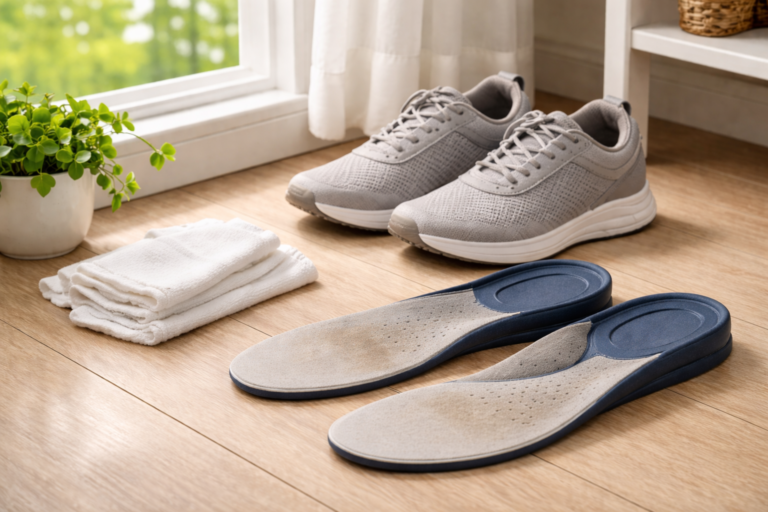
A few everyday habits can reduce how often you need to clean your insoles and help maintain hygiene over time. Most odour issues come from moisture build-up, so the focus should be on keeping things dry.
Wearing clean socks daily reduces the amount of sweat and dirt reaching your insoles. Rotating between different pairs of shoes also helps, as it allows each pair to dry properly between uses.
There are a few additional habits that make a difference:
- Let your shoes air out after use
Remove insoles occasionally and keep them in an open space - Use moisture-absorbing powders or inserts
These help control sweat and reduce bacterial growth - Avoid wearing damp shoes
Even slight moisture can lead to odour - Store shoes in a dry, ventilated area
This prevents moisture build-up - Clean insoles regularly before odour builds up
Light, frequent cleaning works better than deep cleaning later
When to Replace Insoles
Even with proper care, insoles will eventually wear out. Over time, cushioning reduces and support weakens.
You may need to replace them if you notice:
- Reduced cushioning
- Persistent odour
- Visible wear or damage
For orthotics, replacement depends on usage and professional advice. You can also check out our detailed guide on custom insole lifespan and replacement to understand when it’s time to replace them.
Final Thoughts
Knowing how to clean shoe insoles properly helps maintain comfort, hygiene, and durability. Each material requires a slightly different approach, and proper drying is just as important as cleaning itself.
With regular care, your insoles will stay fresh, supportive, and comfortable for much longer.