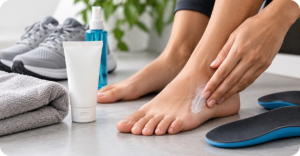
Athlete’s foot (tinea pedis) is a contagious fungal skin infection. You prevent it by keeping your feet, socks and shoes dry, and treat it with antifungal creams, sprays or powders from a pharmacy. It usually starts between the toes as itchy, peeling or cracked skin, because that is where sweat collects and the skin stays warm and damp. Clearing the skin is only half the job, though.
This guide covers how to prevent it, which insoles help, how treatment works, and why it so often comes back from your own footwear.
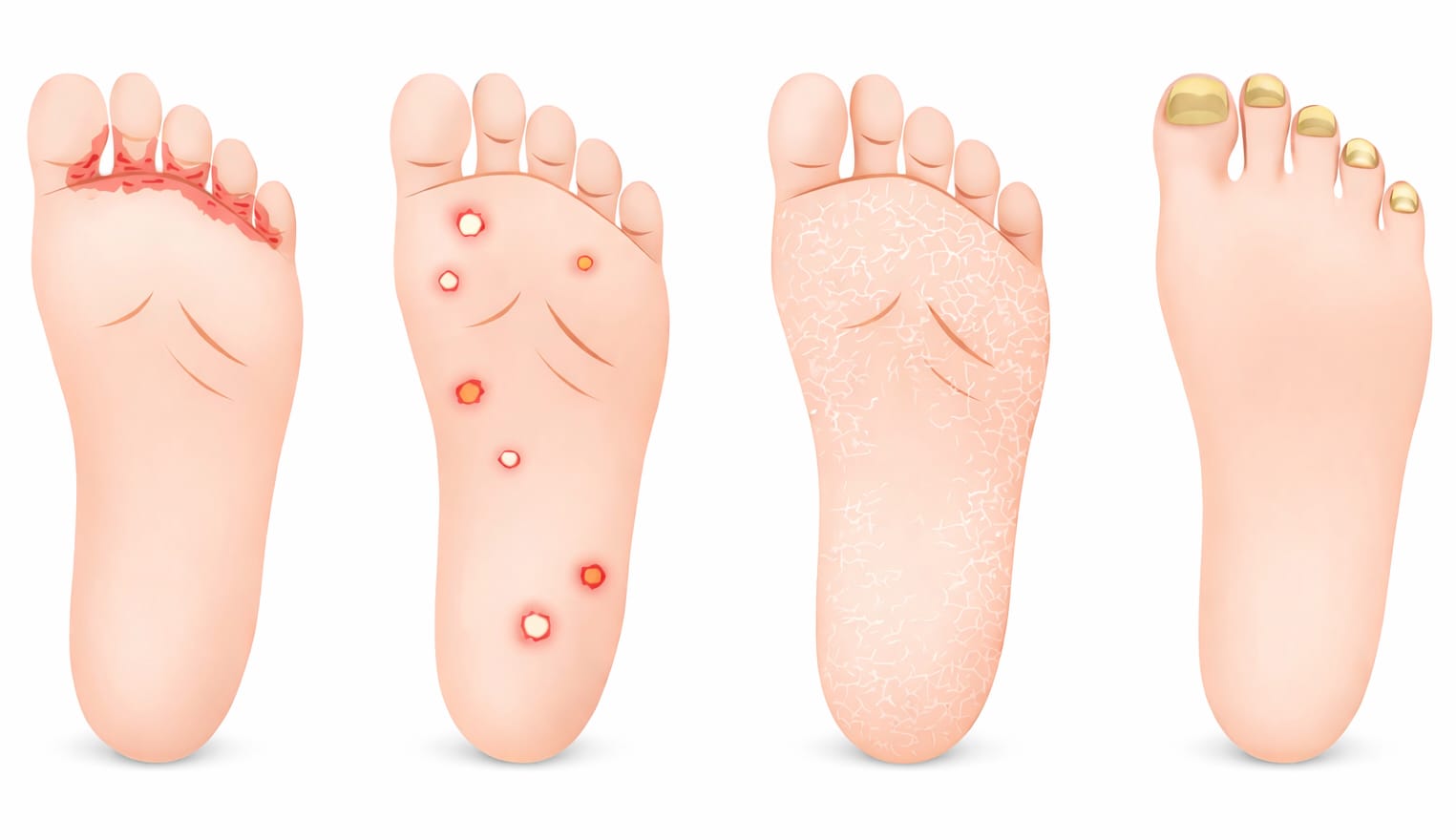
Image Courtesy: disinall.nl
Key Takeaways
- Dry skin between the toes and shoes that get time to dry out do most of the work in prevention.
- Insoles cannot treat Athlete’s Foot, but removable, breathable ones that can be cleaned make it harder for the fungus to survive in your shoes.
- Pharmacy antifungals usually work within a few weeks, as long as you keep using them after the skin looks clear.
- Creams that combine an antifungal with a steroid can hide the infection and make it harder to treat, so avoid them unless a doctor prescribes one.
- If it keeps returning, treat your shoes, insoles and socks as well as your skin, and see a dermatologist if it still does not clear.
How to Prevent Athlete’s Foot?
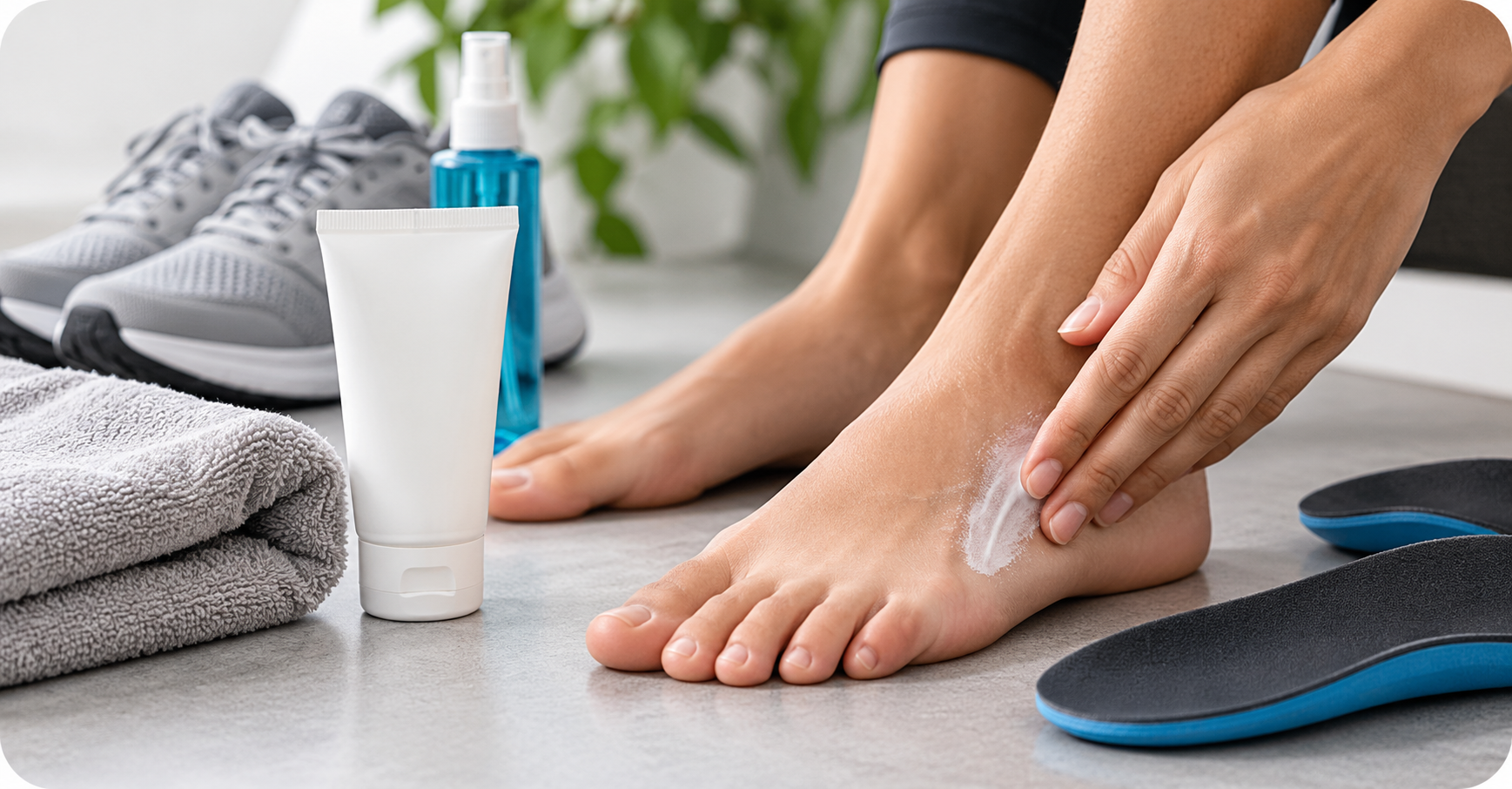
The fungi behind Athlete’s Foot multiply when skin stays warm and damp. They spread through direct contact and through shared floors, towels, socks and shoes, so prevention comes down to two things: keeping your feet dry, and not giving the fungus somewhere to wait for you.
1. Keep the skin between your toes dry
Wash your feet daily and dab between the toes with a towel instead of rubbing, since that is where the infection usually starts. If you spend long hours in closed shoes at work or school, let your feet air for a few minutes when you get home before putting anything else on them.
2. Wear socks that pull sweat away
Cotton or moisture-wicking socks keep skin drier than nylon. Change them every day, and change them again whenever they get damp; a spare pair in your bag helps if your feet sweat heavily.
3. Give your shoes time to dry
Alternate between at least two pairs so each one gets a full day to dry, and leave shoes out in the open overnight instead of zipped in a bag. Take off training shoes as soon as you finish exercising, and avoid rubber or plastic shoes for long stretches, as they trap sweat.
People with Athlete’s Foot shed tiny flakes of infected skin wherever they walk barefoot. In communal showers, changing rooms and around pools, those flakes land on floors that stay warm and wet for most of the day, which is exactly what the fungus needs. Your own skin is also at its most vulnerable there, because skin softened by water is easier for the fungus to take hold on.
Use your own towel and wash socks, towels and bed linen regularly. If someone at home has Athlete’s Foot, get it treated promptly so it does not pass around the family.
For extra care during the rains, see our guide to foot infections in the monsoon.
What Kind of Insoles Help Prevent Athlete’s Foot?
No insole treats a fungal infection. What an insole can do is stop your shoe from becoming a warm, damp store for the fungus. Because the insole is the surface pressed against your sole all day, its design and how you look after it matter. Look for these features:
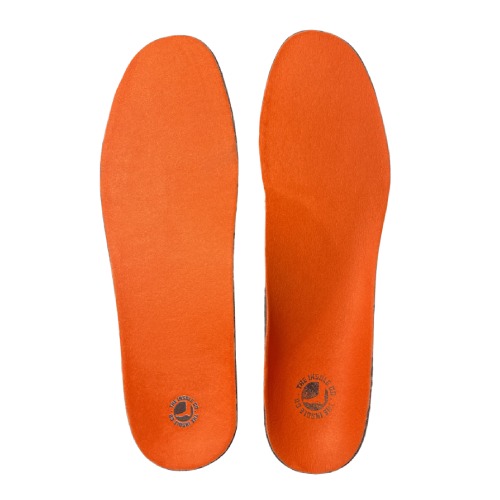
- Removable: Taking insoles out at the end of the day lets both the insole and the inside of the shoe dry. Glued-in insoles stay damp for longer.
- A breathable, moisture-wicking top layer: The top cover is what touches your skin. Fabric that draws sweat away keeps your feet drier than a smooth plastic or rubber surface.
- Easy to clean: During treatment you will be spraying or powdering your insoles regularly, so choose ones with a top cover you can wipe down, and replace any that stay damp or still smell after cleaning. Material also affects how warm your feet get: our comparison of memory foam and gel insoles notes that memory foam can retain heat, while gel generally stays cooler.
- A proper fit: Shoes and insoles that are too tight press the toes together and trap moisture in exactly the spaces where Athlete’s Foot usually starts.
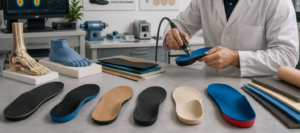
Custom insoles follow the same rules. They use a sweat-absorbing microfibre top layer, which helps with moisture, but they still need to come out of the shoe to dry and should be cleaned during treatment like any other insole. Cheap foam insoles that stay damp or smell even after drying are usually better replaced than cleaned.
How Athlete’s Foot Is Treated?
Most mild cases respond to antifungal products from a pharmacy. Mayo Clinic’s treatment guidance lists terbinafine, clotrimazole, miconazole and tolnaftate as the usual over-the-counter options, advises using them until a week after the rash clears, and notes that results often show within two to four weeks. For stubborn infections, doctors may prescribe stronger creams such as econazole or ciclopirox, or antifungal tablets.
To get the most from a cream:
- Wash and dry your feet fully, especially between the toes, before each application.
- Spread the cream over the rash and a little of the healthy skin around it.
- Use it as often as the label says, and do not stop because the itching has gone.
- Use an antifungal powder or spray inside your socks and shoes alongside the cream on your skin.
If a rash does not respond, a doctor may take a skin scraping to confirm it is fungal.
Why Athlete’s Foot Keeps Coming Back?
Athlete’s foot often returns because treatment stops as soon as the skin looks normal, because a fungal toenail keeps reseeding the skin, or because a family member is still infected. The most overlooked reason is footwear.
A 2019 study of factory workers with Athlete’s Foot found Trichophyton, the fungus that usually causes it, in around 40% of their safety shoes. The researchers concluded that wearing contaminated shoes is likely to raise the risk of reinfection.
A 2025 review of hygiene methods against foot fungi found that no single cleaning method works on everything, but several help:
- Antifungal spray. A 1% terbinafine spray was effective against the fungus on shoe insoles.
- Sunlight. Three days of sun exposure reduced fungal contamination in socks.
- UV-C shoe devices. These cut the fungal load in contaminated shoes by up to 85%.
- Hot washing. It kills fungus on socks, but can damage some materials, so check the care label first.
Treat the shoes and insoles you wear most often at the same time as your skin. Otherwise you may clear the infection only to step straight back into it.
When to See a Doctor?
See a doctor, ideally a dermatologist, if:
- The rash has not improved after a full course of pharmacy treatment
- It spreads to your toenails, hands or groin
- The skin is cracked, oozing, hot, swollen or very painful
- It keeps coming back after treatment
It is also advised to see a doctor if you have diabetes or a weakened immune system. If you have diabetes, check your feet daily, keep the skin between the toes dry, and use footwear and insoles designed for diabetic feet that reduce pressure and rubbing.
The Four Types of Athlete’s Foot
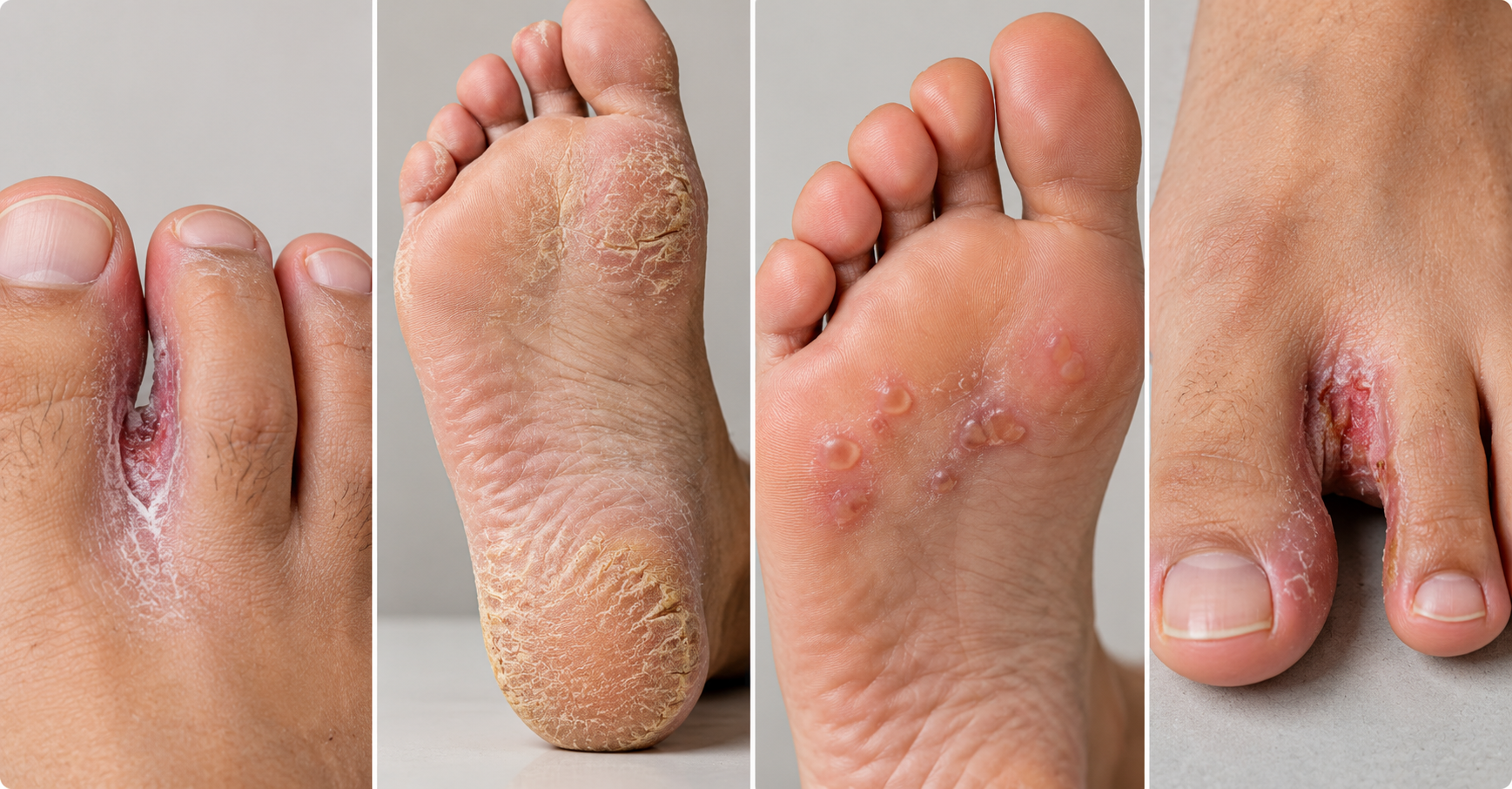
There are four types of Athlete’s Foot:
- Toe web. The most common type, usually between the fourth and fifth toes. Skin turns white and soggy, then cracks and peels.
- Moccasin. Affects the soles, heels and edges of the feet. Skin becomes dry, thick and scaly, and the nails can become involved.
- Vesicular. Small fluid-filled blisters, usually on the sole.
- Ulcerative. The rarest type, with open sores, often between the toes.
On darker skin, inflamed patches may look purple, grey or dark brown instead of red. Eczema, psoriasis and contact dermatitis can look similar, so a rash that does not respond to antifungals should be checked by a doctor, not treated with stronger creams.
Frequently Asked Questions
Does Athlete’s Foot go away on its own?
Rarely. It is unlikely to get better without treatment, and an untreated infection can spread to the toenails, where it is much harder to clear. Starting a pharmacy antifungal early is the simplest fix.
Can I wear my insoles while I am being treated?
Yes, if they are removable. Take them out every evening, use an antifungal spray or powder on them, and let them dry fully before wearing them again. If they are cheap foam insoles that stay damp, replace them once the infection has cleared.
Can my family catch it from me?
Yes. It spreads through shared towels, socks, shoes and bathroom floors. Use your own towel, wash socks and towels regularly, and treat the infection promptly.
Is it okay to walk barefoot at home?
While you have an active infection, wear your own slippers indoors, as flakes of infected skin on the floor can pass it to others. Once it has cleared, going barefoot at home helps your feet stay dry.
Can children get Athlete’s Foot?
Yes, especially active children who spend long days in school or sports shoes. A child with Athlete’s Foot can still go to school but should not share towels or walk barefoot in changing rooms. If your child wears custom insoles, take them out to dry each night.
Conclusion
Athlete’s foot is easy to treat and just as easy to catch again. A cream can clear the skin in a few weeks, but fungus left in a damp shoe or insole is still there the next morning, which is why so many people end up treating it more than once.
The lasting fix is unglamorous: dry feet, shoes and insoles that get time to dry, separate towels, finishing the full course, and leaving steroid combination creams on the pharmacy shelf. If it still keeps coming back, that is a reason to see a dermatologist, not to reach for a stronger cream.