Quick Takeaways
1. Arthritis can cause foot pain, stiffness, swelling, reduced toe movement, arch collapse, and altered walking, which may also strain the knees, hips, and back.
2. Insoles help by redistributing pressure, absorbing shock, supporting arches, improving alignment, reducing joint stress, and improving stability.
3. Not all insoles are equal: soft cushioned insoles may help mild fatigue, but arthritis usually needs structured support such as arch support, metatarsal support, semi-rigid orthotics, or custom orthotics.
4. Choose custom insoles if your foot pain is long-term, moderate to severe, affects the way you walk, is linked to flat feet or visible foot-shape changes, or has not improved with regular insoles.
5. For mild discomfort, standard supportive insoles may be enough; for serious or persistent arthritis foot pain, custom orthotic insoles are positioned as the better option alongside supportive shoes, stretching, weight management, and medical care when symptoms worsen.
Arthritis makes everyday movement harder. Walking to the kitchen, climbing stairs, standing in a queue, tasks most people do without thinking become sources of real pain. For many arthritis sufferers, the feet and ankles are among the first joints to flare up, and the impact travels upward into the knees, hips, and lower back.
The right footwear and foot support can make a measurable difference. Insoles for arthritis are one of the most accessible and effective tools for managing daily pain without medication and without surgery.
This guide covers how arthritis affects the feet, how insoles help, what to look for when buying, and when you should consider custom orthotic insoles instead of off-the-shelf options.
Why Arthritis Causes Foot Pain
Arthritis is not one condition. The two most common types that affect the feet are osteoarthritis (OA) and rheumatoid arthritis (RA), and both cause pain in different ways.
Osteoarthritis breaks down the cartilage that cushions your joints. In the feet, it most commonly affects the big toe joint, the midfoot, and the ankle. Without adequate cartilage, bone rubs against bone, causing pain, swelling, and stiffness.
Rheumatoid arthritis is an autoimmune condition. The immune system attacks the lining of the joints, leading to inflammation, deformity, and significant pain. RA often affects both feet simultaneously and can change the shape of the foot over time.
Both conditions alter how you walk. When one joint hurts, the body compensates by shifting weight elsewhere. Over time, this creates secondary pain in the knees, hips, and spine.
Common foot symptoms in arthritis include:
- Pain and stiffness in the morning or after rest
- Swelling around the ankle or midfoot
- Tenderness at the ball of the foot
- Reduced range of motion in the toes
- Flat feet or arch collapse, more common in RA
How Insoles Help Arthritis
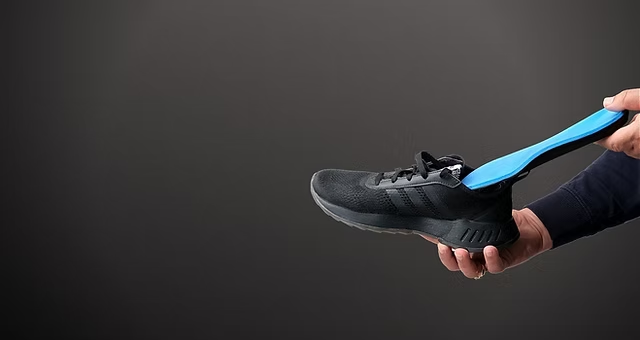
Orthotic insoles for arthritis work by changing how your foot interacts with the ground. They redistribute pressure, support weakened joints, and reduce the impact each step sends through your body.
Benefit | How It Works |
Pressure redistribution | Spreads load across the whole foot instead of concentrating it on painful joints |
Shock absorption | Cushioned materials absorb impact before it reaches the ankle, knee, and hip |
Arch support | Prevents the arch from collapsing, reducing strain on the midfoot and ankle |
Alignment correction | Keeps the foot in a neutral position, reducing compensation patterns |
Reduced inflammation | Less mechanical stress leads to less irritation over time |
Improved stability | Firmer base reduces wobble and fall risk |
Clinical evidence supports insole use in arthritis management. Studies show that customised foot orthoses reduce pain and improve function in both OA and RA.
Types of Insoles for Arthritis
Not all insoles are suited to arthritis. Here is what is available and what each type does best.
Cushioned insoles
Provide padding but little structural support. Useful for general fatigue but not enough for moderate to severe arthritis.
Arch support insoles
Better suited for flat feet associated with RA. They hold the arch and reduce strain.
Metatarsal support insoles
Reduce pressure from the ball of the foot, which is common in RA cases.
Rigid or semi-rigid orthotics
Control motion in the foot and ankle. Often used for osteoarthritis in the big toe or ankle.
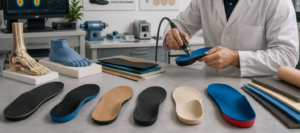
Custom orthotic insoles
Made specifically for your foot shape and walking pattern. Address multiple issues together and provide the most consistent results.
Product Recommendations
Here are some practical options available in India, from entry-level to custom solutions.
Product | Best For | Type | Price Range |
Superfeet GREEN | High arches, midfoot OA | Semi-rigid arch support | ₹3,500 – ₹4,500 |
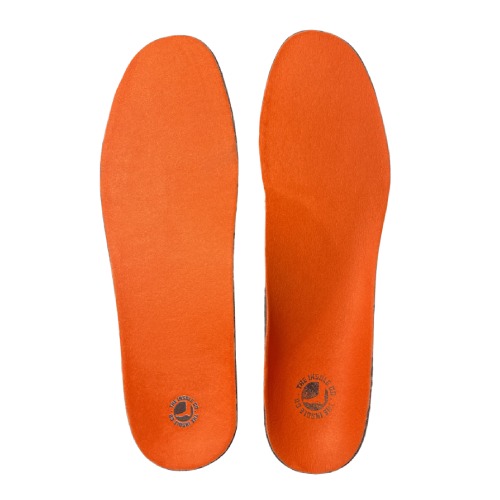
The Insole Company | Moderate to severe arthritis | Custom orthotic | ₹3,500 – ₹7,800 |
Powerstep Pinnacle | Daily use | Cushion + arch support | ₹2,500 – ₹3,500 |
Dr. Scholl’s Arthritis Relief | Mild pain | Cushioning | ₹800 – ₹1,200 |
Spenco Total Support | Forefoot pain | Full-length support | ₹2,000 – ₹3,000 |
Frido Orthopaedic Insole | Daily wear | Semi-rigid | ₹600 – ₹1,200 |
Over-the-counter options work for mild cases. For structural changes or long-term pain, custom insoles provide better correction.
What to Look for When Buying Insoles for Arthritis
Check these features before choosing:
- Deep heel cup, stabilises the rear foot
- Metatarsal support, useful for forefoot pain
- Firm yet cushioned base
- Full-length design for complete support
- Moisture-wicking top layer
- Proper fit inside your shoe
Avoid very soft foam insoles with no structure. They wear out quickly and do not support joints effectively.
When to Choose Custom Insoles for Arthritis
Standard insoles are made for average feet. They may not work if your condition is more advanced.
Choose custom insoles if:
- Arthritis has changed your foot shape
- You have flat feet with arthritis
- You have tried multiple insoles without relief
- Pain affects your walking pattern
- You stand or walk for long hours
Custom insoles last longer and provide more consistent support over time.
Tips for Managing Arthritis Foot Pain
Combine insoles with simple daily habits:
- Wear supportive shoes with proper structure
- Stretch feet and calves regularly
- Use heat for stiffness and cold for swelling
- Maintain a healthy weight
- Replace worn-out insoles on time
- Consult a physiotherapist if pain persists
If pain worsens or deformity develops, consult a specialist. Insoles support treatment but do not replace medical care.
Conclusion
Arthritis changes how your feet handle weight and movement. This affects the entire body over time. Insoles for arthritis reduce pressure, improve alignment, and absorb impact during walking.
For mild discomfort, standard insoles can help. For long-term or severe cases, custom orthotic insoles provide better results because they match your exact foot structure.