Most people pick formal shoes for how they look, not how they feel after eight hours of wear. That’s where things go wrong.
Formal footwear prioritizes structure and style. The slim silhouette and rigid sole that make dress shoes look sharp are the same qualities that make them uncomfortable over time. No real cushioning, minimal arch support, and poor breathability.
This is where insoles for formal shoes come in. The right one, especially a custom orthotic, can completely change how your feet feel by the end of the day.
Why Formal Shoes Need Better Support
Sneakers come with padded footbeds and built-in arch contouring. Formal shoes do not. The standard footbed in most dress shoes is little more than a thin layer of cardboard or leather.
Wear them for a full day at the office or a long event, and the fatigue builds fast. A good insole sits discreetly inside and provides what the original footbed lacks, without changing how the shoe looks.
Beyond comfort, a well-fitted insole also supports posture. Foot alignment connects directly to how your knees, hips, and lower back function. A custom one corrects problems at the source rather than just softening the impact.
Common Problems with Formal Shoes Without Insoles
Friction and blisters: Without a smooth layer between foot and shoe, rubbing against the heel or toe box is common, especially in new pairs.
No shock absorption: Leather or thin rubber soles transfer every step’s impact directly to your heel and forefoot. Over hours, that adds up.
Poor arch support: Most dress shoe footbeds don’t follow the arch at all. For flat feet or high arches, this becomes uncomfortable quickly. A standard insole helps, but a custom orthotic addresses it properly.
Moisture and odor: Leather shoes trap heat. Without a breathable insole layer, sweat accumulates and causes odor over time.
Types of Insoles Suitable for Dress Shoes
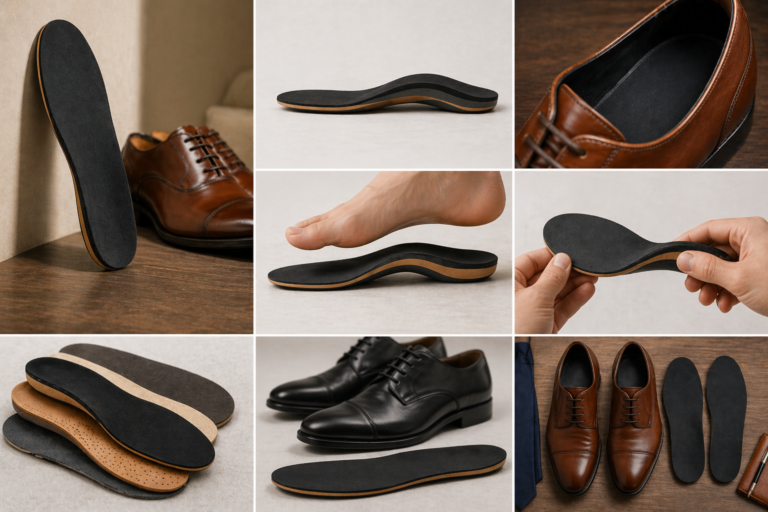
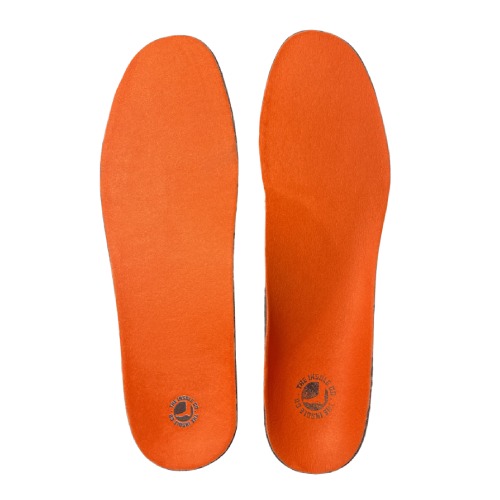
Slim Profile Insoles
Thin and flat, designed to fit without affecting the shoe’s fit. Good for basic cushioning if you have no significant foot concerns. A reasonable starting point.
Arch Support Insoles
Include a contoured ridge that supports the arch and redistributes pressure across the foot. Useful for pronation and flat feet. Ready-made versions work for mild cases, though they’re built around an average foot shape, not yours.
Custom Orthotics
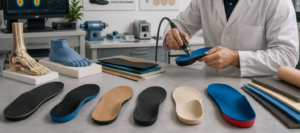
This is where meaningful, lasting correction happens. Custom orthotics are shaped to the specific contours of your arch, heel, and forefoot, so the support lands exactly where your foot needs it.
For plantar fasciitis, heel spurs, overpronation, or chronic arch pain, they make a difference that generic products typically cannot match. They can also be built slim enough to fit inside dress shoes without creating a tightness issue. If you wear formal shoes most of the week and deal with regular foot fatigue, custom orthotics are the more practical long-term investment.
Cushioning Inserts
Focused on padding rather than structure. Gel or foam under the heel and ball of the foot soften each step. They work well alongside a custom base but are not a standalone solution.
Materials Used in Dress Shoe Insoles
Memory Foam: Conforms to your foot and offers a cushioned fit. Tends to compress with daily use and lose responsiveness over time.
Gel: Durable and effective for targeted impact absorption, especially at the heel. Holds its shape better than foam.
EVA: Lightweight and semi-rigid. Used as the base layer in many formal shoe insoles, including custom orthotics, because it stays thin while still providing real support.
Leather Top Layer: Breathable, friction-reducing, and visually appropriate for formal footwear. Most quality custom insoles use a leather or moisture-wicking surface.
The best custom orthotics combine a firm EVA or carbon fiber base with a leather top, giving you structural correction and all-day comfort in one slim package.
Key Features to Look For
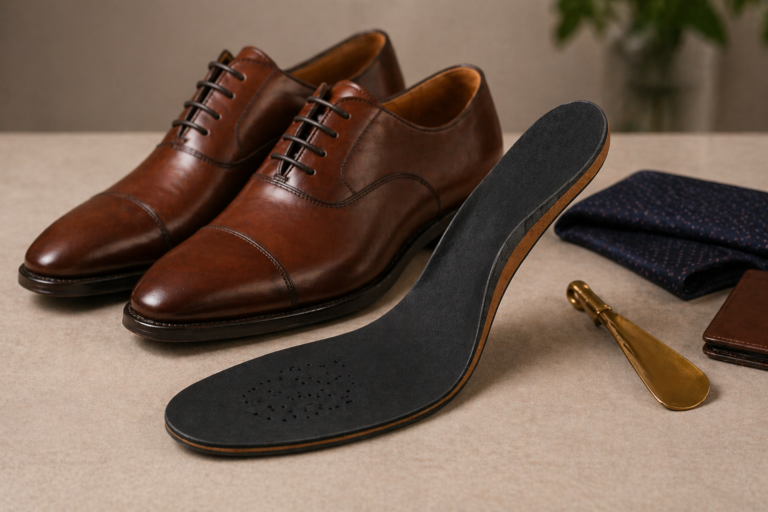
Thin design: Anything too thick will tighten the fit and push your heel above the collar. Aim for 3–5mm or less.
Breathability: A leather, perforated, or moisture-wicking top layer makes a real difference over a full day in enclosed shoes.
Correct arch level: The support should match your actual arch, not a generic standard. This is the main advantage of going custom. Not sure of your arch type? The wet footprint test on a paper bag is a quick way to check.
Heel stability: Even a shallow heel cup stops the foot from sliding forward, reducing toe pressure and improving walking comfort noticeably.
Insoles for Sneakers vs Formal Shoes: A Quick Comparison
| Feature | Sneaker Insoles | Formal Shoe Insoles |
|---|---|---|
| Thickness | 6–12mm, multi-layered | 2–5mm, slim profile |
| Cushioning | High, impact-focused | Moderate, comfort-focused |
| Flexibility | High | Low to moderate |
| Arch Support | Deep contouring | Subtle to firm |
| Fit | Spacious footbed | Tight construction |
How to Choose the Right Insoles for Formal Shoes
Flat feet: Need firm arch support. Generic foam compresses quickly and offers little real correction. A custom orthotic positions support exactly where your arch sits.
High arches: Need cushioning under the heel and forefoot to distribute pressure. Custom orthotics fill the arch gap that off-the-shelf options often miss entirely.
Neutral arches: A slim insole with a light arch ridge usually does the job. A custom option still fits better simply because it is made for your foot specifically.
If you sit most of the day, a quality slim insole is probably enough. If you are on your feet for long stretches regularly, a custom orthotic is the better long-term call. They hold their shape far longer than generic foam that compresses and needs frequent replacement.
Final Thoughts
Formal shoes do not have to hurt. The right insole closes the gap between how dress shoes are built and what your feet actually need.
Generic insoles are better than nothing. But for anyone spending real time in formal footwear, a custom orthotic is the most effective and lasting solution. Built to your foot, slim enough for a dress shoe, and durable enough to go the distance.
Frequently Asked Questions
Can I use regular insoles in formal shoes? Athletic insoles are too thick and will tighten the fit. Use insoles made specifically for dress shoes, or better yet, a custom orthotic designed to fit within the slimmer construction.
What works best for flat feet in dress shoes? Custom orthotics with a firm, precisely contoured arch. Off-the-shelf options help with mild cases but rarely match the correction you get from something built to your foot.
How often should insoles be replaced? Generic foam lasts around 8–12 months. Custom orthotics last two years or more with regular care.
Do insoles make formal shoes feel tighter? Slightly, yes. Most dress shoe insoles are built to minimize this. If the fit becomes too snug, a three-quarter insole that stops before the toe box usually solves it.
Are custom orthotics worth it for dress shoes? For plantar fasciitis, overpronation, flat feet, or chronic heel pain, absolutely. For general comfort with no specific issues, a good slim-profile insole is a fine starting point.