Treatment is not always necessary. When intervention is appropriate, options include shoe lifts, physiotherapy, footwear modifications and, in selected cases, surgery. The right approach depends on the size and cause of the discrepancy and its impact on daily activities.
What Causes Leg Length Discrepancy?
Leg length discrepancy is generally classified into two types.
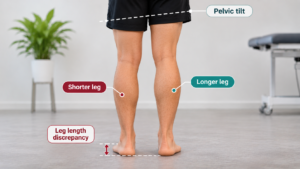
Structural leg length discrepancy occurs when the bones in one leg are physically shorter than those in the other. It may be congenital (present from birth) or develop following fractures, growth plate injuries, infections or certain medical conditions.
Functional leg length discrepancy occurs when the legs appear unequal because of pelvic positioning, muscle tightness or joint restrictions, even though the bones may be similar in length.
Functional discrepancy: bone lengths are similar, but pelvic position, muscle tightness or joint restriction makes one leg appear shorter.
This distinction matters because treatment differs. A structural difference may be managed with a shoe lift, while a functional discrepancy may benefit from physiotherapy or treatment of the underlying problem.
Is a 1 cm or 2 cm Leg Length Difference Significant?
Small differences in leg length are common and do not automatically require correction. According to AAOS clinical guidance, discrepancies below 2 cm are generally managed without surgery, particularly when they are not associated with significant deformity.
The following table provides a general guide to how different measurements may influence treatment decisions.
| Leg length difference | Clinical considerations |
|---|---|
| Less than 1 cm | Often well tolerated, with no treatment necessary. |
| 1–2 cm | May affect walking in some individuals; treatment depends on symptoms and functional limitations. |
| 2–5 cm | Shoe lifts or footwear modifications may be considered. |
| More than 5 cm | Specialist assessment is particularly important; treatment may require more complex interventions. |
These ranges are not rigid treatment thresholds. A person with a 1.5 cm difference and significant walking difficulties may benefit from intervention, while someone with a larger discrepancy but no functional limitations may not require immediate treatment.
A 2020 clinical review on leg length discrepancy also highlights that treatment recommendations depend on the size of the discrepancy and the individual’s circumstances.
The measured difference alone should not determine treatment. Symptoms, mobility, medical history and clinical findings are equally important.
Symptoms and Diagnosis
Some individuals experience no symptoms, while others develop changes in posture or walking patterns. Possible signs include limping, uneven hip positioning, walking on the toes of the shorter leg, difficulty maintaining balance or fatigue during prolonged walking.
Leg length discrepancy may also contribute to hip, knee or lower back discomfort in some individuals. However, research has not established that minor discrepancies consistently cause back pain, and other possible causes should be considered.
How Is Leg Length Discrepancy Measured?
Assessment typically involves examining posture, walking patterns, joint mobility and pelvic alignment. A clinician may place measured blocks beneath the shorter leg while the person stands to estimate the difference. When more accurate measurements are required, X-rays or specialised leg-length imaging may be recommended.
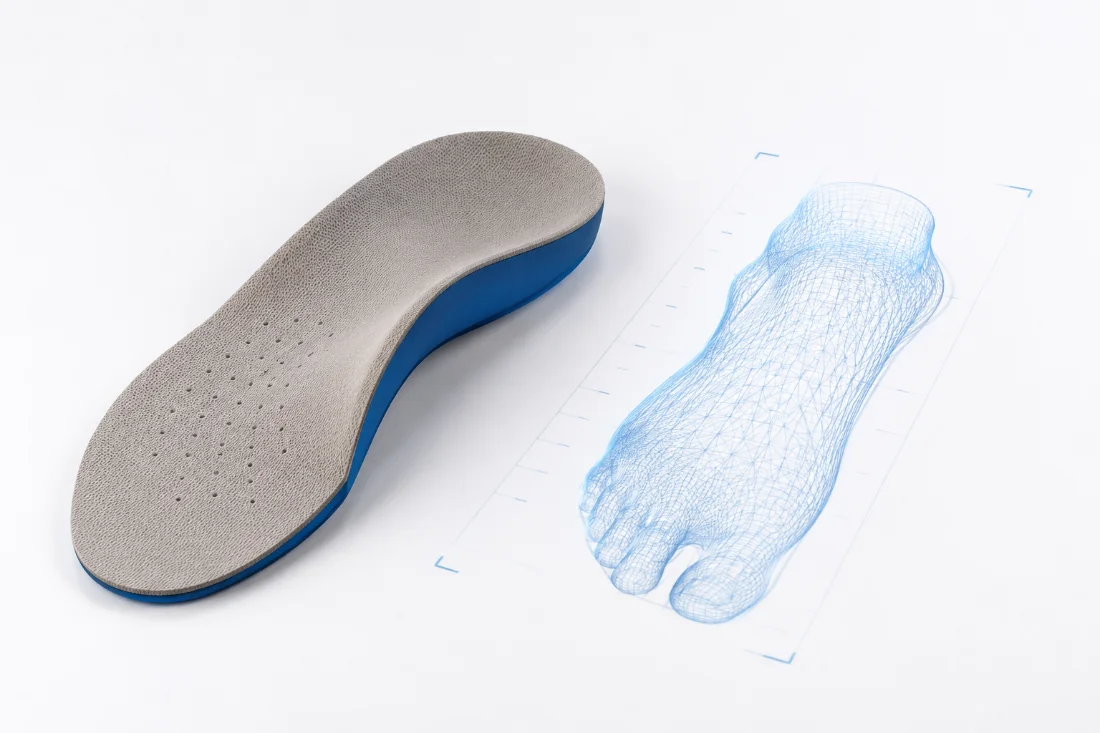
Foot scanning can provide information about foot shape and, depending on the technology, pressure distribution. However, a foot scan alone cannot establish the anatomical difference between the lengths of the leg bones.
Accurate diagnosis is important because an apparent difference caused by joint or muscle problems may require a different approach from a structural discrepancy.
Treatment Options for Leg Length Discrepancy
Treatment depends on the cause, severity and functional impact of the discrepancy. Not everyone requires intervention, and several nonsurgical options are available.
1. Observation Without Treatment
For small discrepancies that do not cause significant symptoms, treatment may be unnecessary. In children, periodic monitoring may be recommended because differences can change as the bones grow. Adults with stable, minor discrepancies and no functional problems may not require corrective devices.
2. Shoe Lifts and Orthotic Insoles
Shoe lifts are commonly used to compensate for structural leg length differences. They raise the shorter side and may improve walking comfort or alignment in suitable patients.
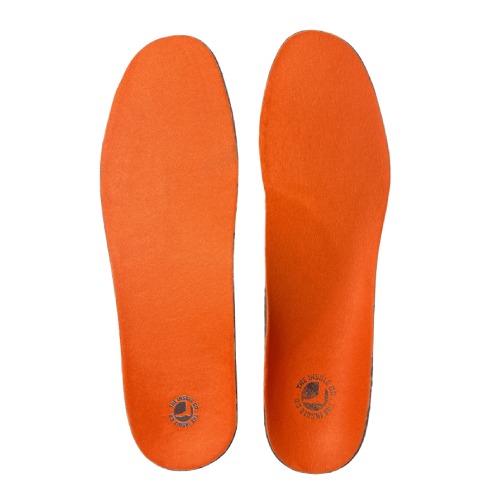
Internal lifts are placed inside the shoe, typically beneath the heel. They are relatively inexpensive and removable, making them practical for some smaller discrepancies.
External lifts are incorporated into the shoe’s sole. They may be more appropriate when the necessary adjustment cannot fit comfortably inside the footwear.
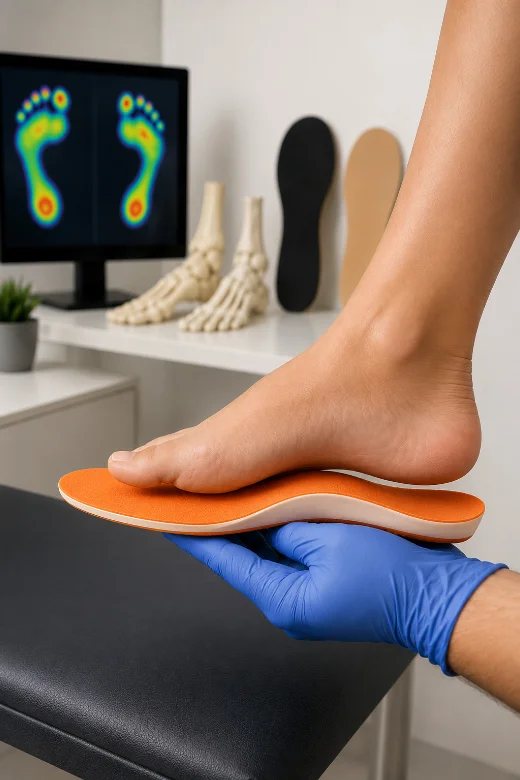
Custom orthotic insoles may be considered when additional foot support, pressure redistribution or individualised fitting is required. At The Insole Company, customised orthotic solutions are available for different foot-support needs, although a properly selected shoe lift may be sufficient for someone with an uncomplicated leg length discrepancy.
A 2018 systematic review published in Archives of Physical Medicine and Rehabilitation found that shoe lifts may improve pain and function in adults with leg length discrepancy and musculoskeletal complaints. However, the available evidence was rated as low quality.
The appropriate correction should be determined individually, and complete equalisation is not always necessary.
3. Physiotherapy
Physiotherapy may help when muscle tightness, joint restrictions or altered movement patterns contribute to a functional discrepancy. Treatment may involve strengthening exercises, improving joint mobility and gait training. It may also help address associated movement difficulties in individuals with structural discrepancies.
However, exercises cannot physically lengthen a shorter femur or tibia.
4. Surgery
Surgery is generally reserved for selected patients with substantial discrepancies or significant functional problems. Depending on the circumstances, procedures may involve lengthening the shorter leg, shortening the longer leg or, in growing children, influencing bone growth.
These interventions require specialist evaluation and involve risks. For smaller discrepancies, nonsurgical management is generally preferred.
Which Treatment Option Is Most Suitable?
There is no single treatment appropriate for every person with leg length discrepancy. The best approach depends on the measured difference, symptoms, underlying cause and lifestyle requirements.
| Treatment option | When it may be considered | Limitations |
|---|---|---|
| No treatment | Small discrepancies without significant symptoms | Monitoring may be needed, particularly in children |
| Ready-made shoe lift | Some smaller structural discrepancies | Limited adjustment and footwear compatibility |
| Custom orthotic insole | Additional foot support or individualised fitting is needed | More expensive and not always necessary |
| External footwear modification | Larger corrections cannot fit inside shoes | Requires suitable footwear and professional modification |
| Physiotherapy | Functional discrepancies or associated mobility problems | Cannot change anatomical bone length |
| Surgery | Selected substantial discrepancies or major functional limitations | Invasive, with potential complications |
A simple, appropriately fitted shoe lift may be sufficient for someone with an uncomplicated structural discrepancy. More expensive products do not necessarily provide better results. The objective is to select a correction that addresses the individual’s needs without introducing unnecessary discomfort or instability.
Can Shoe Lifts Be Used With Sandals or Slippers?
In India, where sandals, slippers and open footwear are commonly worn, compatibility with different footwear styles can influence treatment decisions. Shoe lifts generally work best in supportive footwear that holds the foot securely. Loose slippers or open-back sandals may allow an internal lift to move or alter the position of the foot.
The UK’s Royal National Orthopaedic Hospital provides guidance on footwear adaptations, recommending secure fastenings, solid soles and adequate heel support for footwear requiring modifications.
Some sandals may accommodate specialised external modifications, but not every design is suitable. For individuals who regularly alternate between sports shoes, formal footwear and sandals, it may be necessary to consider different footwear arrangements rather than transferring the same lift between every pair.
Can Leg Length Discrepancy Get Worse Over Time?
Whether a discrepancy increases depends largely on its underlying cause and whether the person is still growing. In children, a structural difference may become more pronounced as growth continues, particularly when one leg’s growth plate has been affected by injury or disease. Regular monitoring may therefore be recommended.
In adults, a longstanding anatomical discrepancy generally remains stable once bone growth has ended. However, new injuries, surgical procedures or changes in joint function can create or alter a discrepancy.
A difference that appears to be increasing, particularly when accompanied by new pain or changes in walking, should be medically assessed.
Can a Shoe Lift Be Used Without Consulting a Specialist?
Although ready-made shoe lifts are widely available, selecting one based solely on an estimated leg length difference is not ideal. An apparent discrepancy may be functional rather than structural, and the full measured difference does not necessarily require correction.
Using an inappropriate lift height may affect footwear fit, walking mechanics or stability. For a known, previously assessed discrepancy, a clinician may recommend a straightforward lift. However, when the cause or measurement is uncertain, evaluation by an orthopaedic specialist or another appropriately qualified healthcare professional is advisable.
When Should Leg Length Discrepancy Be Assessed?
Medical assessment is advisable when unequal leg lengths are associated with persistent limping, walking difficulties, discomfort or noticeable changes in posture. A discrepancy that develops after an injury or surgery, appears to be increasing or has never been accurately measured also warrants evaluation.
An orthopaedic specialist can help determine whether the difference is structural or functional and whether further investigations are necessary. Depending on the findings, treatment may involve observation, physiotherapy, a shoe lift, specialised footwear modification or another intervention.
The priority is to establish whether treatment is necessary before selecting a corrective device. For many individuals, a simple intervention, or no intervention at all, may be the most appropriate approach.
Not sure what your feet need?
At The Insole Company, we 3D scan your feet and design custom insoles around your foot shape and support needs. Book an assessment at our Bengaluru store to discuss whether custom insoles are right for you.